Space and Physics
 PUBLISHED
 3
3





Solar flares and coronal mass ejections are dramatic releases of energy and plasma from the Sun. When they are directed at Earth, they can affect radio communications, harm satellites, and create spectacular aurorae. But Earth is not the only target that can be affected by these events. The other objects in the solar system are fair game and it appears that Mercury might have been hit by one earlier this month.
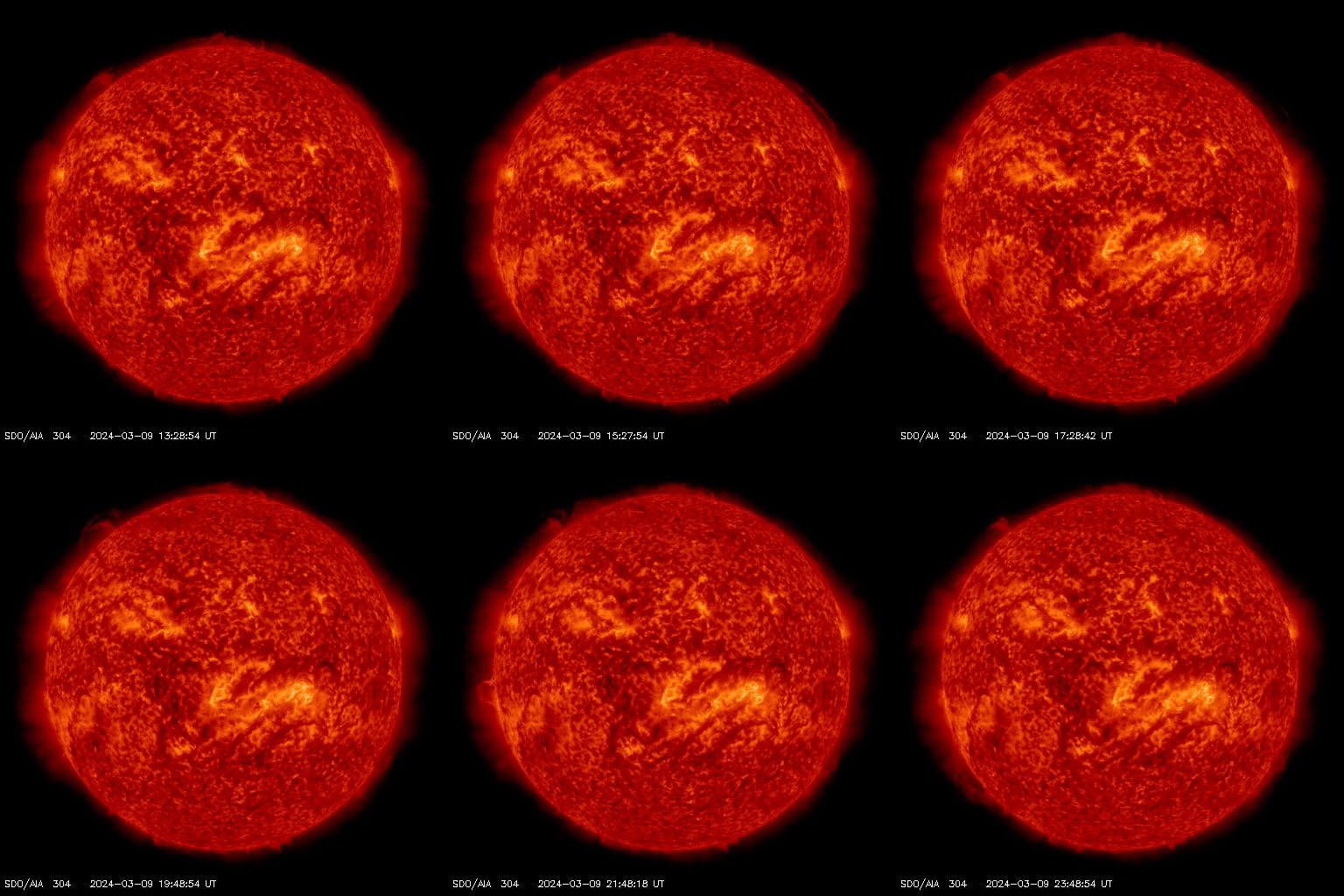
On March 9, the Sun released a lot of energy and plasma. NASA’s Solar Dynamic Observatory (SDO) did not see exactly what went off, as whatever was happening did so on the far side, beyond the area that we can see – but what was visible was a massive filament stretching beyond the limb of the Sun.

If NASA's STEREO Behind mission was still in operation, it might have spotted it, but only its twin STEREO Ahead is working; their names come from the position in the orbit of the Earth, either ahead or behind. The coronal mass ejection was big enough that hiding behind the Sun wasn’t enough to stay hidden. The joint European and NASA mission, the Solar and Heliospheric Observatory (SOHO), also saw the dramatic release of plasma, and in that direction was Mercury.
Mercury is currently moving towards its furthest apparent distance from the Sun, which will happen this Sunday. But from a top view of the solar system, we would see the smallest and closest planets to the side of the Sun where that release of plasma was launched.
The effects on Mercury, as suggested by Spaceweather.com, are speculative. Currently, there is not a probe around the planet to confirm what happened – but soon there will be two. The European-Japanese mission BepiColombo will arrive at the planet in December, splitting into two orbiters.
The mission has been using Mercury’s gravity to slow down and so it has passed near the planet several times already. During those flybys, observations revealed that Mercury experiences X-ray aurorae. Plasma from the solar wind is trapped by the weak magnetic field of the planet (one percent of Earth’s own) and sent slamming into the rocks below. This process makes the rock fluoresce in X-rays.
If the probe Mio was already around the planet, it could be seeing something intriguing following that coronal mass ejection. Although the solar maximum – the point of maximum activity for the Sun – is expected to be reached before December, the Sun will continue to be active for a while longer, so such an opportunity might present itself again soon.