Space and Physics
 PUBLISHED
 1
1


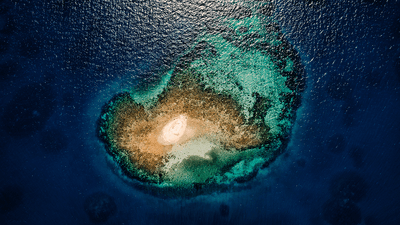


A man has stumbled across probable space debris whilst snorkeling on Cayos Cochinos, a remote island cluster off the coast of Honduras in Central America.
Mike Irmen and his family were visiting the islands when they spotted the debris, conspicuously lying there on the beach. The debris was clearly labeled with the word "Ariane", and Irmen turned to Reddit to ask for help identifying what it was.
The mystery was solved pretty quickly, helped somewhat by the identifying logo.
"Nice find. I actually make these as part of my job. I have no doubt that I even installed the logo. These panels are produced in Switzerland by Beyond Gravity (formerly RUAG Space)," Reddit user ColossalDiscoBall explained, posting a picture of himself in front of an Ariane 5 launch system. "It is part of the payload fairing (PLF). The PLF is delivered in multiple sections and can be varied in length to suit the mission. Since this is an ECA ML configuration with dual launch (requiring the longer PLF), this is definitely from the last two years."
Irmen, from Dayton, Ohio, is himself an aerospace engineer, and suspected he was looking at the upper cowling of a rocket.
"The upper cowling of a rocket covers the payload during launch, and then it jettisons from the rocket after it leaves the Earth's atmosphere," he told Newsweek. "It looked like it had been there a while since the salt water had corroded a bunch of the metal pieces."
The piece found does appear to be part of the Ariane 5 fairing, itself part of the Ariane 5 launch system that was Europe's main launch system between 1996 and 2023.
"The Ariane 5 rocket fairing was positioned on the very top of the launcher. Its function was to protect the payload against aerodynamic, thermal and acoustic phenomena as the launcher rose from the launch pad through the atmosphere to an altitude of approximately 100 km [62 miles]," the European Space Agency explains.
"Once the launcher left Earth’s atmosphere, approximately three minutes after liftoff, the fairing was jettisoned. This lightened the remaining launcher’s load as it lost approximately two tonnes of this no-longer required structure."
[H/T: Newsweek]