Humans
 PUBLISHED
 5
5


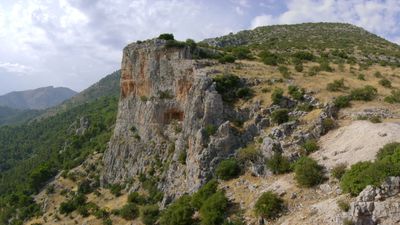


Authorities in Spain are investigating a 39-year-old man after it was discovered that, on a quest to get some exciting photos for social media, he had poured water over 6,000-year-old cave paintings, causing them to be damaged.
Agents from the Spanish Civil Guard’s Nature Protection Service (SEPRONA) launched the investigation in May, after coming across the images on Facebook. The posts mentioned that they were taken in the Sierra Sur de Jaén, a mountain range in southern Spain that’s protected by the country’s heritage register.
“The photographs show that water has been poured onto the cave paintings, wetting them in order to see them better and capture a clearer image,” said the Guardia Civil in a statement seen by CNN.
While that might’ve given the man a clearer view of the paintings for his Facebook profile, it’s likely that no one else will get to see the paintings as they were again.
The sedimentary rocks found in this particular part of the Sierra Sur de Jaén are limestone, which is water-soluble; the salts within them would’ve initially been dissolved by the water, before forming a crust when it eventually evaporated. That crust, said the Guardia Civil, can cause “irreparable damage”.
But as many of the people who damage ancient historical evidence end up discovering, fuck around and you’ll find out; the man is now being investigated for crimes against historical heritage, under legislation set out in the Spanish Constitution to protect the country’s heritage for future generations.
Probably not how he expected to start his anthropology influencer era.
Across the pond, the US is also all too familiar with similarly destructive antics. Back in 2022, vandals scratched a racist phrase over 2,000-year-old Native American petroglyphs in Utah, while the one ancient rock art site that’s accessible in Zion National Park is the most graffitied place in the entire park.
It’s part of the reason why the location of so much of the rock art in places like national parks remains a closely guarded secret, to the point where there’s an unspoken rule between those that stumble upon it to not share its exact location, out of respect for preserving and protecting the art.
If you’re one of the lucky few that gets to see a bit of ancient human history, whether secret or on public display, the advice from the National Park Service is to leave well alone – and leave the water bottles for drinking from.