Nature
 PUBLISHED


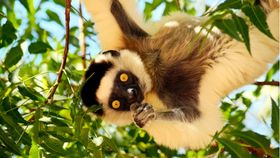


Madagascar is a strange place indeed. Isolated from the rest of the world since it broke away from Africa some 135 million years ago, it has been off on its own path ever since, and the creatures that got trapped there have become the odd-balls of the animal kingdom.
Lemurs of all kinds are no exception. Some of the furry critters need to eat all day and night every day of the year to get enough nutrients, others simply tuck in for the winter and hibernate. Ring-tail lemurs smear their shoulders with a smelly paste to fight with odor, while the indri instead does it through the haunting songs they sing.
“Lemurs are equal parts ridiculously cool and totally bizarre in that they represent the extremes and the extremely strange in the primate world,” explained Abigail Derby Lewis of the Chicago Field Museum, and author of a new study looking into the evolution of these peculiar mammals.
It turns out that the reason that lemurs are just so damn weird is because the fruit on Madagascar is also pretty weird.

Most primates love to eat fruit as it is packed full of energy meaning that they usually need to consume less of it. But lemurs, like a select few other primates, are noted for shunning fruit altogether and focusing their attention on leaves instead. Made of stronger stuff, and thus much harder to digest and extract nutrients, leaves are not often thought of as a good food source for smaller animals like lemurs.
This new study published in Scientific Reports, however, may have found out why the primates snack on the poorer quality leaves. It turns out that the trees on Madagascar, 80 percent of which are found nowhere else on the planet, produce fruit that is particularly low in nutrients. Specifically, the researchers found that they are very low in protein. This, they argue, is why lemurs tend to eat leaves.

The study analyzed fruit from 62 forests across Africa, Asia, and the Americas, and found that primates living in each region where more likely to have more fruit-based diets if the trees in the forests produced fruits high in nitrogen, a key component in protein. They found that Madagascan fruit had the lowest levels of nitrogen of all, and thus likely pushed the lemurs into their leafy diet, which in turn impacted on their odd behaviors.
“The low nutritional quality of the fruits in Madagascar may have caused lemurs to differentiate their diet and develop some of the unique traits that we can see today,” said lead researcher Guiseppe Donati. By better understanding the ecology of lemurs, it is hoped that conservationists can better protect them from extinction.