Space and Physics
 PUBLISHED
 7
7


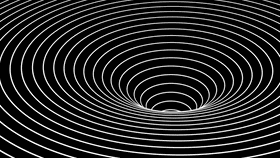


Black holes are extreme objects, a region where gravity is so intense that nothing, not even light, can escape. Explaining them has required the use of our most advanced theories – quantum mechanics and general relativity – but a conundrum lies in that the two don’t work well together.
The late professor Stephen Hawking was one of many physicists worldwide whose work tried to explain the complexity of these objects. One of his most important contributions to this field of research was Hawking radiation. This is the theory that black holes emit particles, taking away a bit of energy from the object. Such knowledge suggests black holes are not exactly black, as particles do indeed escape from them. He also posited that the radiation would be thermal and the temperature depends on the area of the object.
We can’t build real black holes in the lab, at least not yet. To test his theory, researchers have had to be creative in constructing an analogous testing ground. In the past, researchers used water and waves to create fake black holes. Another, called a sonic black hole, has been particularly good in testing Hawking’s theory. In 2016, Professor Jeff Steinhauer from the Israel Institute of Technology constructed an acoustic black hole. This is a "trap" where sound waves have to move faster than the speed of sound to escape – a pretty good analogy for a black hole.
Now, Steinhauer and colleagues have improved on the original setup of three years ago to test Hawking's predictions in new ways. His team has reduced the noise coming from the magnetic field, enhanced its thermal and mechanical stability, and made better optics to study the system.
The work, published in the journal Nature, showed that the sonic black hole agreed with professor Hawking's predictions. In the British physicist's theory, the temperature of a black hole is linked to Hawking radiation, to the entropy of the object, and its surface gravity. This relationship was also seen in Steinhauer's experiment, providing confirmation of Hawking's work.
As previously mentioned, relativity and quantum mechanics do not work well together. To make them gel, physicists have to come up with approximations that work in certain scenarios. "The point of studying black holes is to learn about the new laws of physics, not just about black holes themselves," Professor Steinhauer previously told IFLScience.
Consider space-time: every bit of it will have a certain amount of energy. This energy can suddenly turn into a particle-antiparticle pair that can then interact once again and turn back into energy.
The question, then, is what happens if the pair form on an event horizon, the surface beyond which nothing can escape the gravitational pull of a black hole? In this case, one particle will fall in and the other will escape, taking away a little bit of energy from the space-time around the black hole.
[H/T: Gizmodo]