Space and Physics
 PUBLISHED
 2
2



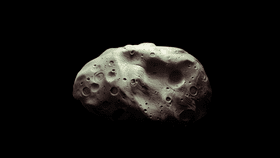


On January 18 at 9:51 pm UTC, stony asteroid (7482) 1994 PC1 will safely fly by Earth. The 1 kilometer (0.6 mile) long object is a potentially hazardous object, as it gets very close to our planet and is big enough to cause incredible devastation if it were to hit. Fortunately, it will pass at a distance five times further than the Moon – more than 1.98 million kilometers (1.23 million miles) from the earth.
This passage is the closest for at least the next 172 years so, despite its potential to be dangerous, we can rest assured that this space rock is not going to hit our planet any time soon. The next close passage under 5 million kilometers (3 million miles) will also be on January 18, but in 2105, and the one after that will be on January 20, 2194. In both cases, the asteroid will pass much further away than it will in two weeks' time.
The asteroid was officially discovered in 1994 by Robert McNaught at the Siding Spring Observatory in Coonabarabran, Australia. However, observations of it actually extend back twenty years before that, to September 1974. This long arc of observations has allowed astronomers to measure its orbit very accurately. The uncertainty on its close passage is less than 150 kilometers (93 miles).
Asteroid (7482) 1994 PC1 is classified as an S-type – rich in siliceous material, usually moderately bright, consisting often of iron and magnesium-silicates – they are the second most common type of asteroid after the carbonaceous C-type.
If you're interested in observing this space rock cross the sky, you’ll need a good telescope. With an expected highest magnitude of 10, the naked eye or even binoculars won’t be able to cut it.