


 Space and Physics
 PUBLISHED



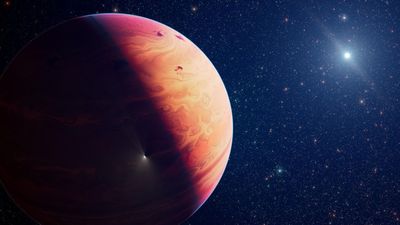


Classifying things in science is always fraught with the potential for uncertainty. Even things that are obviously different, like stars and planets, have a muddled overlap with objects whose nature is too close to either definition for our comfort. Now, a standard defining boundary between these types of objects has been shifted by new observations from JWST.
The overlapping classes in this case are gas giant planets and brown dwarfs. Brown dwarfs are stellar objects; they form like stars from the fragmentations of a gas cloud that then collapse.
Unlike stars, however, brown dwarfs aren’t massive enough to fuse regular hydrogen into helium. Gas giants have a similar composition, but they instead form bottom-up from little pebbles, the same way rocky planets form, and then steal gas such as hydrogen and helium.
In general, anything larger than 13 times the mass of Jupiter has been deemed a brown dwarf, as these objects should be able to ignite deuterium in their core. These small brown dwarfs emit some light and heat, but so do recently formed planets.
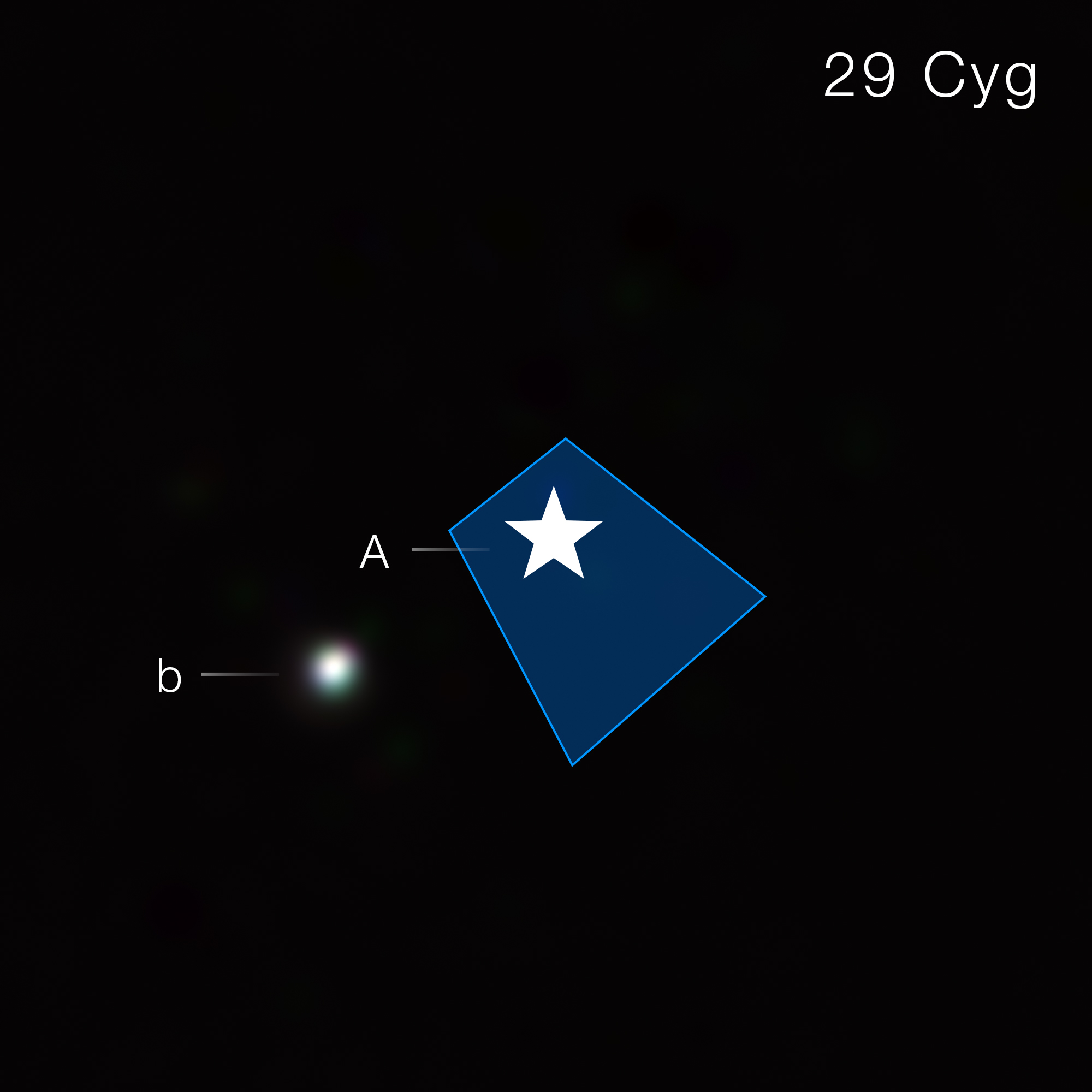
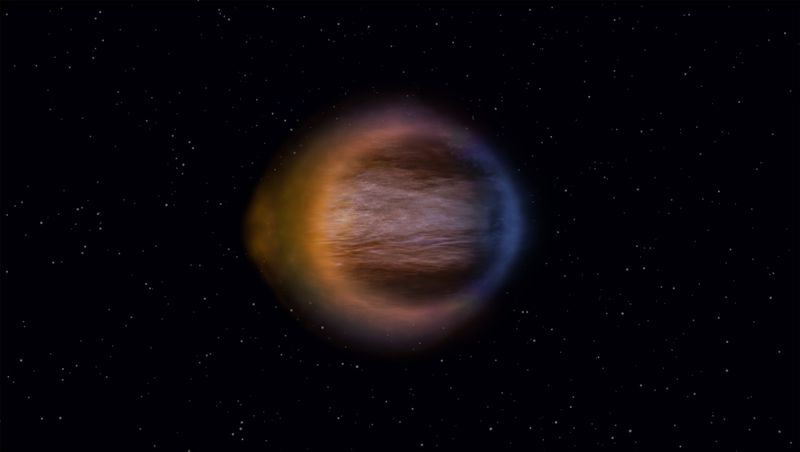
Object 29 Cygni b sits in this gray area. It is young, hot, and as massive as 15 Jupiters. It orbits its star, 29 Cygni, at 2.4 billion kilometers (1.5 billion miles), or roughly the distance between Uranus and the Sun. Given the planet’s properties, it was an excellent test case – one of four, to be precise – for astronomers.
"In computer models, it's very easy for fragmentation in a disk to run away to much higher masses than 29 Cygni b. This is the lowest mass you could plausibly get. But at the same time, it's about the highest mass you could get from accretion," said lead author William Balmer at Johns Hopkins University and the Space Telescope Science Institute, both in Baltimore, in a statement.
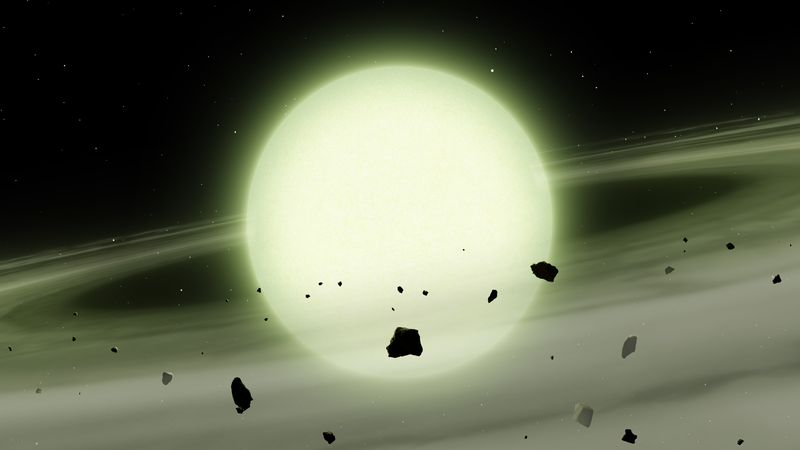
Thanks to JWST observations, the team was able to determine multiple reasons why this object formed like a planet and not like a star. An important one is its composition. The planet is enriched by elements heavier than helium, and the weight of these elements alone is about 150 times that of Earth. This suggests it came from an accretion disk filled with solid material.
The team was also influenced by its orbital parameters, which are more in line with what we expect from a planet that formed from a protoplanetary disk than from a brown dwarf that formed together with its star.
"We were able to update the planet's orbit, and also observed the host star to determine its orientation with respect to that orbit," added Ash Messier, co-author and a graduate student at Johns Hopkins University. "We showed that the inclination of the planet is well-aligned with the spin axis of the star, which is similar to what we see for the planets of our solar system."
"Put together, this evidence strongly suggests that 29 Cygni b formed within a protoplanetary disk through rapid accretion of metal-rich material, rather than through gas fragmentation," said Balmer. "In other words, it formed like a planet and not like a star."
A paper describing the results is published in The Astrophysical Journal Letters.


 1
1