Space and Physics
 PUBLISHED




This week NASA made history with DART, the world’s first planetary defense test mission, by purposely colliding with an asteroid to see if it’s possible to change a space rock’s orbit should we ever need to deflect any future ones heading our way.
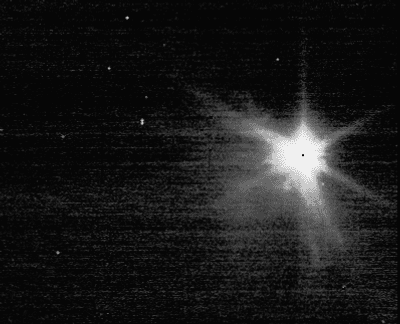
There have been many eyes in the sky and on the ground following this test, which saw the DART spacecraft successfully smash into asteroid moonlet Dimorphos on September 26 at 7:14 pm ET. We’ve seen the start of the Earth-based telescopes’ photos and footage trickling in, but now we have the first space-based telescope images thanks to JWST.
#DART. #AstroMiniBRpic.twitter.com/DWQEnyW7x9— Projeto Céu Profundo (@CeuProfundo)
JWST is not the only space telescope that turned to face this historic mission. Hubble was also programmed to watch, though we are yet to see these images. NASA's Lucy mission, on its way to study the Trojan asteroids that share Jupiter's orbit, also caught it, with data due to be downloaded in October.
Until then, we have plenty more ground-based telescopes sharing their views of the collision.
#Didymos /#Dimorphos sistem and we recorded a hige increase in brightness and a dusty clouds! @nasapic.twitter.com/SChqcMXji3— Virtual Telescope (@VirtualTelescop)
#DARTOPTiK 🇰🇪🔭 pic.twitter.com/lBgL2SaYPW— DART - OPTiK (@DartOptik)
@WeizmannSciencehi @nlchabot@cathomas09@asrivkin have a look. pic.twitter.com/tsNjVFB703— David Polishook (@DPolishook)
Unfortunately, the success of the mission means the death of DART, its fate sealed since the mission idea first took shape. However, mission complete, the science starts now.
The Italian Space Agency’s LICIACube, DART’S companion until 15 days ago when it was released, has captured the first before and after images of the collision. It will continue to provide images of the crater and take some initial measurements, but the true follow-up will be the European Space Agency's Hera mission, which will arrive at the binary asteroid system in 2026 and provide a detailed analysis of the effect of DART on Dimorphos.