Space and Physics
 PUBLISHED



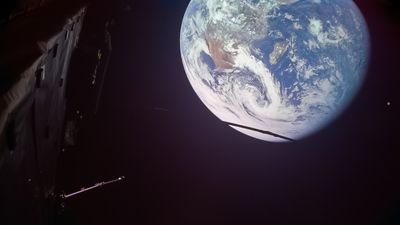


The European Space Agency's Juice mission, which will arrive at Jupiter to study its moons in 2031, this week skimmed past the edge of Earth's atmosphere as part of its serpentine journey around our solar system.
It was technically the spacecraft's second Earth flyby, even though you might see it referred to as Earth Flyby I. The first time around, in August 2024, was a unique and never-before attempted flyby of both Earth and the Moon, using the two bodies to adjust the craft's course. It was an incredible feat that gave the mission some extra… juice.
Afterwards, the probe flew to Venus and passed by the planet in August last year. That takes us to Monday, September 29, when it returned home once more to perform an exquisite maneuver around Earth. The spacecraft received a boost of 3.5 kilometers (2.2 miles) per second and was deflected by a 20° angle.
“The flyby required ultra-precise navigation in real time. Thanks to our very careful planning, we used only a small amount of the propellant reserved for this flyby,” Angela Dietz, Juice’s Spacecraft Operations Manager, said in a statement. “This gives us more to use at Jupiter to carry out observations of the planet’s icy moons.”
On approach to Earth, Juice's path had to be tweaked by just a tiny amount. There were six opportunities to light the thrusters, but only one was needed to nudge it onto the optimal trajectory around Earth, where ESA reports it flew 8640 kilometers (5370 miles) over the Indian Ocean.
Less fuel spent means more flexibility when it comes to the science around Jupiter once Juice arrives at the Jovian system in a few years' time.
This flyby was also a chance to test the craft's scientific instruments, though this isn't the first time Juice's science suite has been warmed up: first, during the Earth-Moon flyby in 2024, then during the serendipitous campaign to observe interstellar Comet 3I/ATLAS last year.
“Juice's journey to Jupiter provides only a few opportunities to calibrate and validate the instruments under well-understood environmental conditions,” added Juice project scientist Claire Vallat.
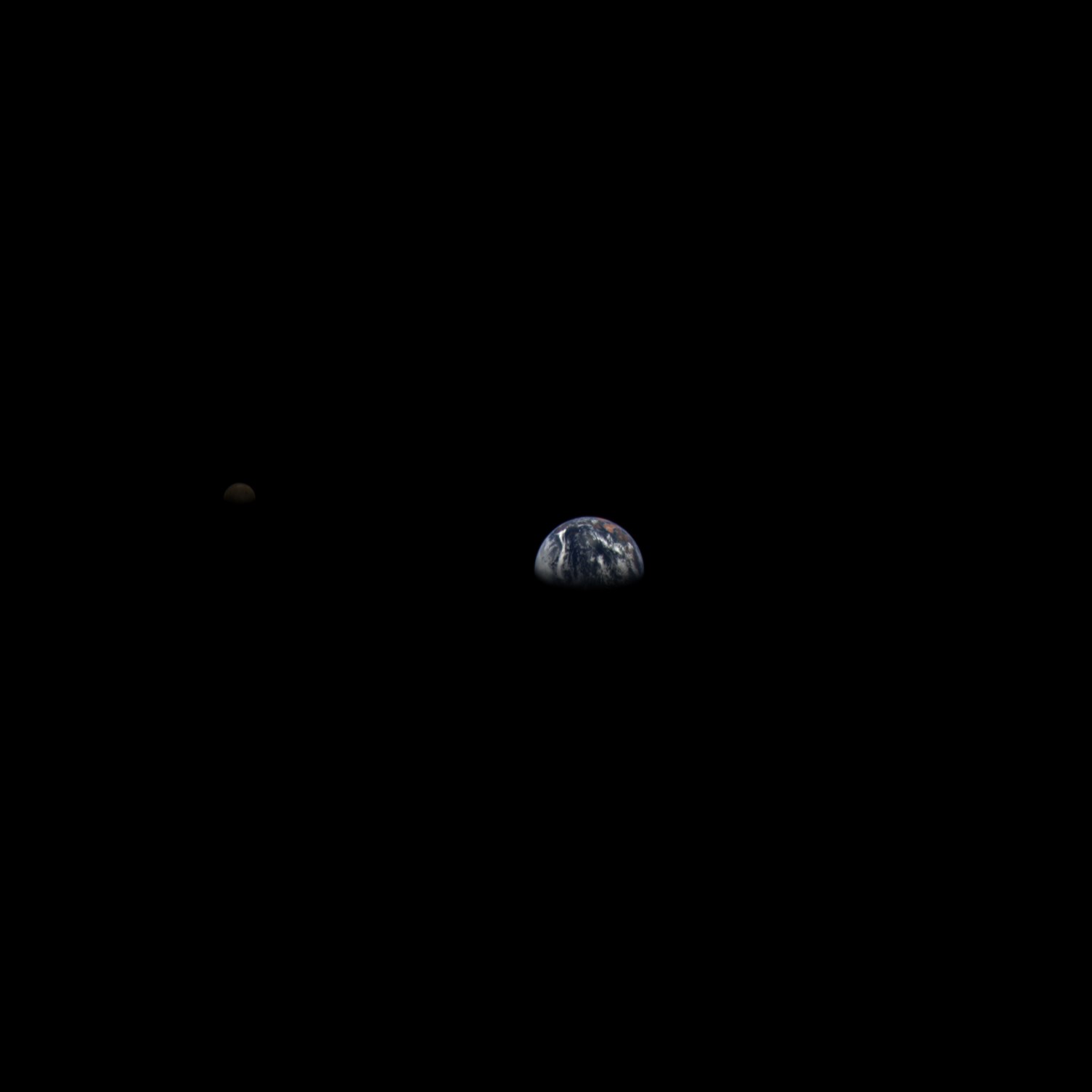
“Given the limited time available and operational constraints, instrument activities sometimes have to be prioritised, for example when Juice was in Earth's shadow this morning, and relying on battery power alone."
"During this flyby, calibration activities were prioritised based on their relevance to preparing the instruments for their work at Jupiter,” she said.
In a press release describing the outcome of the flyby, ESA wrote that instrument operations around the gas giant are far more complicated than those carried out this week. Juice will perform 35 flybys of Jupiter's icy moons Callisto, Europa and Ganymede, and discussions about which instruments will operate and when began 10 years ago and are still ongoing.
Juice now faces a few more years of going around the Sun without any major operations, bar the possibility of running across another interstellar comet. Its trajectory will take it back past Earth in 2029 for its last flyby, which will finally put it on track for a date with Jupiter in July 2031.


 1
1