Culture and Society
 PUBLISHED


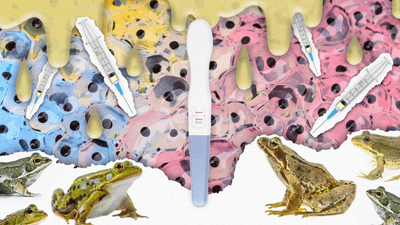


Once upon a time, if a person wanted to find out if they were pregnant they had to give some of their urine to a frog. It sounds like a story born of myth or perhaps a creepy nursery rhyme, but it’s true. In fact, people were still finding out they were pregnant via frog up until the 1960s.
It’s a chapter of history Dr Isabel Davis, Research Leader in Collections and Culture at the Natural History Museum, London, got very familiar with during her research for the museum’s 2026 gallery, "Fixing Our Broken Planet". It led her to the Family Planning Association Archive held in the Wellcome Collection, London, and revealed the strangely effective – though arguably ethically dubious – history of using frogs as pregnancy tests.
It wasn't thought that it would be right for women to get their own results.
Dr Isabel Davis
Pregnancy tests are used to detect when the hormone human chorionic gonadotropin (HCG) rises. It facilitates early detection of pregnancy, making prenatal care easier and giving doctors a way to date and track the progress of a baby’s development.
Today many of us take it for granted that finding out can be as simple as a trip to the drug store. Not long ago it was a much lengthier and ethically questionable process. For starters, people were only offered a pregnancy test if it was really called for. Qualifying reasons included illness, unclear symptoms, or perhaps denial in the case of younger patients who didn’t want to admit they could be pregnant.
Things back then were done by post, so a sample was sent in the mail to the lab and the results delivered back to the doctor. Today, you can receive the news in the comfort of your own bathroom, but back then it was a different story.
“It wasn't thought that it would be right for women to get their own results,” said Davis to IFLScience. “People feared that there would be maybe an abortion epidemic. And so, you had to go to your doctor to get your results. Doctors had to kind of mediate the result.”
Before the frogs, there was another animal test which used mammals.
Dr Isabel Davis
But I’m jumping ahead here, aren’t I? As however that result was dealt with, it wouldn’t have been possible without a frog.
The Family Planning Association had a pregnancy testing laboratory in the United Kingdom. It opened in 1948, and along with several other labs formed the main route for testing pregnancy in the UK between the 1930s and 1960s. The Royal Mail meant they had plenty of urine in their supply, and you know what else they had a lot of? Frogs.
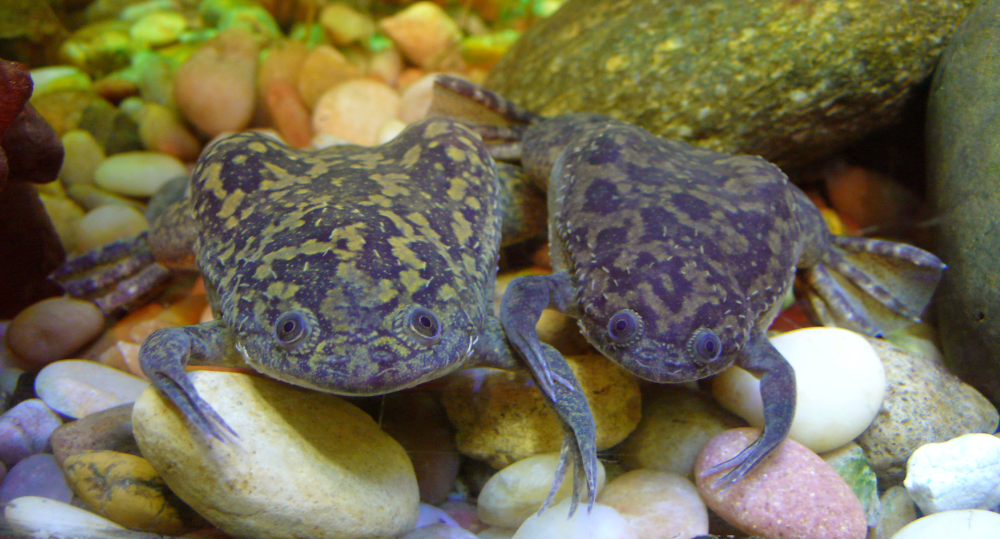
The African clawed frog (Xenopus laevis) to be precise. It formed part of what was known as the Hogben test for pregnancy, in which a urine sample was injected into the hind leg of a female. If the woman was pregnant, the HCG in her urine sample would trigger the frog to lay hundreds of eggs within 24 hours. According to Davis, other frogs have been used, but none of them are as good as Xenopus due to their superior egg size.
It’s a remarkable example of the ways in which our species has learned to use nature as a solution to human problems. In fact, frogs weren’t even the first animal to become a pregnancy test.
Frogs are an advance in the sense that you can reuse them.
Dr Isabel Davis
“Before the frogs, there was another animal test which used mammals and particularly mice,” said Davis. “But of course, you've got to dissect the mouse to get the result. Frogs are an advance in the sense that you can reuse them. You don't need a vivisection license because they lay eggs externally.”
Today the frogs have been granted leave from delivering The Big News to expectant parents, but Xenopus remains an important model in animal research. However, their legacy from those decades lives on both in what it can teach us about the ethics of transporting natural resources from other countries, and how carefully we look after them once they have arrived.
“My work is very much about how nature and culture interact,” said Davis. “There's a story here about how human health has impacted on wildlife – these frogs have been moved and that's created vectors of disease. There was also a concern in the 1930s and 40s from South African conservationists that they were being irresponsibly over-collected.”
“Actually, these frogs have done quite well, but there are many feral populations in Wales and Central America and other places where they take over the habitats of other frogs, and they've also spread fungal disease.”
One of the goals of "Fixing Our Broken Planet" was to change the way people looked at everyday items that had been inspired by or taken from nature and consider what they represent, and what it’s taken for them to be a part of our everyday lives. Suffice to say, I’ll be giving thanks to the frog oracles next time I'm popping to the drug store.