Humans
 PUBLISHED





If you want to get two Fridays in a week, all you need is $7.2 million and a hell of a lot of land.
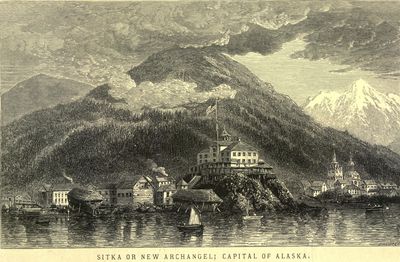
In 1867, the Russian Empire sold Alaska to the US for a sum of $7.2 million (a mere $0.02 per acre). It was a deal that suited both parties nicely: the US was eager to expand its territory and bolster trade across the Pacific, while Russia had grown increasingly uneasy about the vulnerability of its far-flung colonial outpost in North America, thousands of miles from Moscow.
On the ground in Alaska, however, there were several awkward practicalities to sort out. Among the most curious was the question of time, dates, and calendars.
Russia was still using the old Julian calendar, a solar-based dating system introduced by Julius Caesar over 1,800 years earlier. Meanwhile, the US and much of Europe had long since switched to the Gregorian calendar, a slightly tweaked version of the dating system introduced by Pope Gregory XIII in 1582 CE.
Both calendars are identical in structure, with the same months, the same 365-day year, and a leap year every four years. However, the Julian calendar ever so slightly overestimates the length of the solar year because it assumes an average year is 365.25 days long, not 365.2422 days. This might sound minor, but over centuries, it can cause the date to drift dramatically away from the natural seasons. The Gregorian reform fixed this by skipping leap years in years ending in 00, unless the year is divisible by 400.
In 1867, the drift meant the two calendars had diverged by a full 12 days. In effect, this meant the date in Russia was 12 days behind the date in the US and parts of Europe. However, only the dates differed between the Julian and Gregorian calendars, while the days of the week are exactly the same. Friday, October 18th, 1867, in the Gregorian system would, therefore, be Friday, October 6th, 1867, in the Julian.
There was also the problem of time zones. Under Russian rule, the international date line had been drawn along Alaska's eastern border with Canada, placing Alaska on the Asian side of the globe. This meant Alaskans kept the same calendar date as Russia, a day ahead of where their geography suggested they should be. Once Alaska passed into American hands, the line was shifted west to the Bering Strait, putting Alaska onto the American side of the globe.
When it came to the day of the land transfer, the combined effect of these two changes — 12 days forward for the calendar, plus a day to account for the date line conundrum — meant that Alaskans technically went to bed on the night of Friday, October 6th, 1867, and woke up on Friday, October 18th, 1867. A bunch of dates had seemingly vanished overnight, and yet somehow, it was still Friday.
Russia, for its part, stubbornly held onto the Julian calendar until 1918, just after the Tsar had been toppled and the Communists had seized power in what became known as the October Revolution of 1917. Except, of course, this event wasn’t actually in October. Under the Gregorian calendar, the revolution actually unfolded on 7, November 1917.