Nature
 PUBLISHED



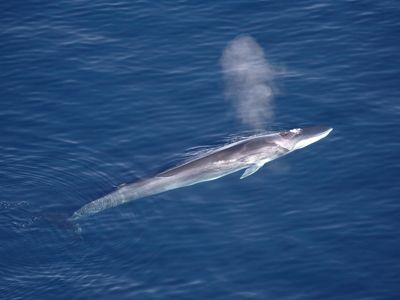


Whale meat doesn’t tempt the appetites of consumers as it used to. But that's not stopping the head of Iceland’s sole remaining whaling company.
Kristján Loftsson, the owner of the Hvallur hf. whaling company, is eyeing up a lucrative new market in the world of health and wellness: iron supplements made from whales.
Speaking to the Icelandic media about plans to use meat from fin whales to produce supplements, Loftsson plans to sell capsules under the name “Reyðarjárn.”
The hype of heme iron
Iron supplements are perfectly straightforward and cheap to manufacture synthetically. But there is evidence that heme iron, sourced from the tissues of living, bleeding animals, is absorbed more readily and is easier for the body to process.
Although it is already possible to obtain heme iron from non-vulnerable animals, like chickens, Loftsson argues that fin whales offer some of the best quality of product, pound-for-pound.
“Marine mammals have significantly higher concentrations of iron in their muscles than land animals,” Loftsson told Morgunblaðið, a leading Icelandic newspaper. “Among land animals, beef has one of the highest levels, at around 40 mg/kg of dry weight, while fin whale meat contains around 300 mg/kg of dry weight. Seal meat has the highest concentration, at around 900 mg/kg of dry weight.”
This high concentration of iron is, he explained, “due to the fact that diving mammals need to maintain substantial oxygen reserves in their muscles, which they do by storing oxygen bound to myoglobin.” This is the protein in blood that binds oxygen and iron.
But Loftsson goes further, controversially suggesting that developing parts of the world might want to expand their whaling industries in a bid to tackle malnutrition and anemia.
“I can see many countries wanting to start hunting whales when they have them off their coasts while their people are suffering from anemia,” he commented. “This could lead to an increase in whaling in many parts of the world. It is a major problem in sub-Saharan Africa, while there are large whale populations off the west coast of Africa.”
“Are these countries supposed to leave the whales there while their people suffer and children are harmed by persistent iron deficiency?”
It has been noted, however, that the sale of whale supplements in regions outside of Iceland, the Faroe Islands, Norway, and Japan would be difficult as many nations ban the trade in whale products. Others see this as a cynical ploy to use the suffering of others to allow Loftsson and his company to continue hunting some of the largest, longest-living animals in the world.
Conservation concerns
There's a whole other side to this story, though.
The move comes after Hvallur hf. announced it will no longer sell fin whale meat to Japan, once one of its largest markets. The Asian nation has instead restarted its own industry of hunting fin whales and so reducing its need for Icelandic imports, despite a significant drop in its own domestic demand for whale meat.
Given this declining backdrop, some believe the latest supplement pitch is a last-ditch effort to salvage a dwindling industry.
“There is no market or demand for fin whale meat being caught in Icelandic waters currently, so they are killing the whales 'just in case' they can find a buyer,” Luke McMillan, head of hunting and captivity at Whale and Dolphin Conservation, said in a statement.
Either way conservationists are wholly dismayed that Iceland continues to hunt fin whales.
Measuring up to 25 meters (85 feet) in length, fin whales are the second-largest animal on Earth in terms of length, second only to the blue whale. These gentle giants can live up to 90 years, swim up to 40 kilometers per hour, and have a cosmopolitan range across much of the world’s oceans.
After decades of commercial whaling during the 20th century, fin whales are still considered vulnerable by the IUCN Red List of Threatened Species.
There is, however, evidence to suggest their population numbers are slowly rising and bouncing back from decades of heavy hunting. A massive feeding aggregation spotted in Antarctica hints at a possible return to some of the historical behaviors in ancestral feeding grounds.
The last thing they need is a WhaleMaxxing trend to respark demand.