Health and Medicine
 PUBLISHED
 5
5


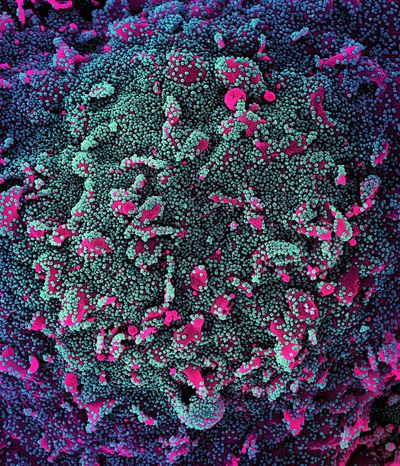


Controversy has bubbled up around a recent research project at Boston University that created a lab-made hybrid version of SARS-CoV-2, the virus responsible for COVID-19.
The research combined the spike protein of the Omicron variant (BA.1), the fast-spreading but relatively mild variant, with the “backbone” of a more pathogenic strain from earlier in the pandemic. The aim was to decipher whether the spike protein is the reason why the Omicron variant is less pathogenic than other variants.
However, the chimeric virus was found to be capable of killing 80 percent of the mice infected with it in the lab. This is a higher death rate than the typical Omicron variant, but less deadly than the original Wuhan strain that killed 100 percent of the mice.
The research, which is yet to be peer-reviewed, was posted on the pre-print server bioRxiv on October 14.
Understandably, the idea of toying around with pandemic-causing viruses caused a fair bit of outrage on social media, with some scientists dismissing the study as “madness.” But it wasn’t just Twitter users and tabloids that were concerned.
STAT reports that the research team did not inform the US National Institute of Allergy and Infectious Diseases (NIAID) about some details of the work, which they partially funded. The NIAID claims the original grant application did not specify that the scientists were going to carry out these specific experiments. In fact, they even indicated that the agency first heard about certain aspects of the research through media reports.
The scientists from Boston University, however, have suggested that the work has been widely misreported and misunderstood. Some UK newspapers claimed the project was ”gain of function” research, but the researchers say that isn’t the case.
“They’ve sensationalized the message, they misrepresent the study and its goals in its entirety,” Ronald B Corley, NEIDL director and Boston University Chobanian & Avedisian School of Medicine chair of microbiology, said in a statement.
“First, this research is not gain-of-function research, meaning it did not amplify the Washington state SARS-CoV-2 virus strain or make it more dangerous. In fact, this research made the virus replicate less dangerous,” continues the statement from Boston University.
They also say the study was conducted in the lab’s biosafety-level 3 facilities and they were not obliged to disclose this research to the NIAID because it wasn’t gain-of-function research.
Nevertheless, it looks like the NIAID still has some questions to ask.
“I think we’re going to have conversations over upcoming days,” Emily Erbelding, director of NIAID’s division of microbiology and infectious diseases, told STAT earlier this week.