Humans
 PUBLISHED


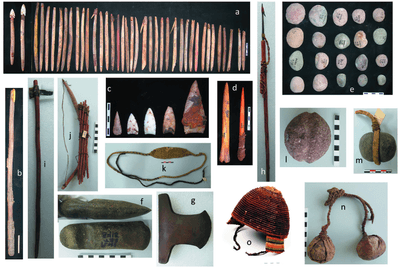


Hunter-gatherers in the Atacama Desert of northern Chile did not live in perfect harmony – quite the opposite, according to research published today. Instead, they were immersed in millennia-old endemic violence, which was a consistent part of life in these ancient societies.
Communities maintained a traditional lifestyle of fishing, hunting, and gathering for 10,000 years on the coast of the northern Chilean desert, providing a unique opportunity for researchers to investigate patterns in interpersonal brutality over time.
Using a three-pronged approach, which explored bioarchaeology, geoarchaeology, and socio-cultural contexts such as rock art, weapons, and settlement patterns, a team led by Vivien Standen of the University of Tarapacá, Chile, revealed the violent reality faced by these ancient humans.

The team examined the remains of 288 adult individuals dating from 10,000 years ago to 1450 CE, looking for signs of trauma that may have resulted from interpersonal violence. They also searched for isotopes of the element strontium (Sr) to ascertain whether individuals were members of local or non-local groups.
At the same time, they analyzed patterns in weaponry and depictions of combat in rock art, revealing that “violence was invariant during the 10,000 years in which these groups lived without contact with the Western world.”
“Traces of lethal and non-lethal violence on bones and soft tissues, the use of weapons, and rock art representations, support the notion that populations faced conflicts and tensions that, sometimes, were resolved by violent means,” the team write in their paper.
“The chemical signature of Sr for individuals sampled suggests that these fights and brawls were generated in the context of local groups,” as opposed to outsiders, they add.

While rates of brutality were relatively unchanged over time, the type of violence varied. Notably, there was an increase in lethal violence during the Formative Period (1000 BCE–500 CE) – a trend also seen in other studies of the Andean region. Non-lethal violence, meanwhile, slightly decreased over time.
To explain this proclivity for violence, the researchers suggest that the absence of centralized political systems in hunter-gatherer societies could have been a source of tension, particularly as these populations were organized into small-scale groups.
“Another factor may have been competition for the same resources in the extreme environments of the Atacama Desert,” they write. “Finally, from the Formative Period onward, we cannot rule out a certain level of conflict between fishers and their close neighbors, the horticulturalists.”
The study is published in PLOS ONE.