Humans
 PUBLISHED



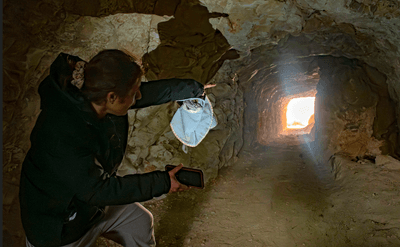


No one knows when it was built, why it was built, or what purpose it served, but the discovery of a massive, ancient tunnel system is captivating archaeologists in Israel.
The subterranean network was recently uncovered by the Israel Antiquities Authority (IAA) during a routine survey ahead of the construction of a new residential neighborhood near Kibbutz Ramat Rachel in Jerusalem.
“We were excavating in relatively rocky and exposed terrain when suddenly we discovered a natural karstic cavity,” Sivan Mizrahi and Zinovi Matskevich, excavation directors on behalf of the Israel Antiquities Authority, said in a statement.
“To our amazement, as the excavation progressed, this cavity developed into a long tunnel.”
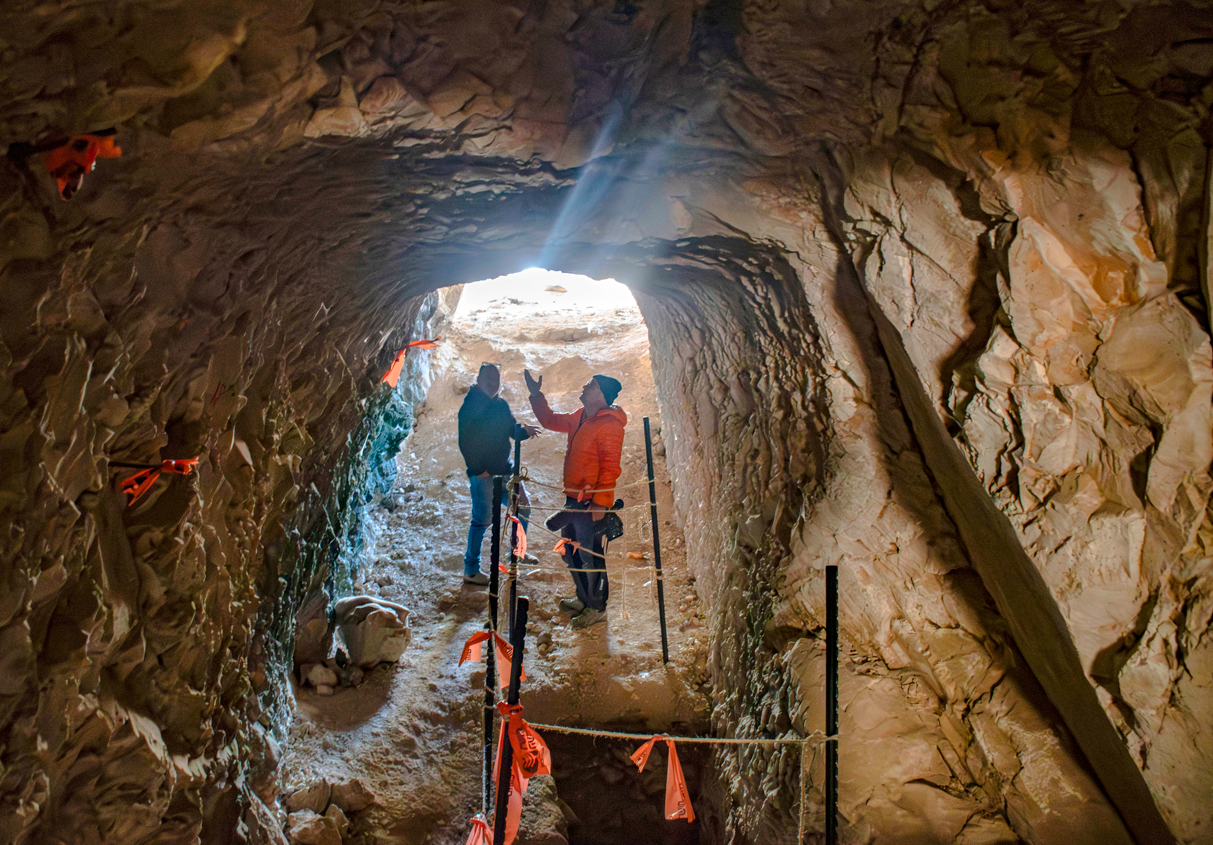
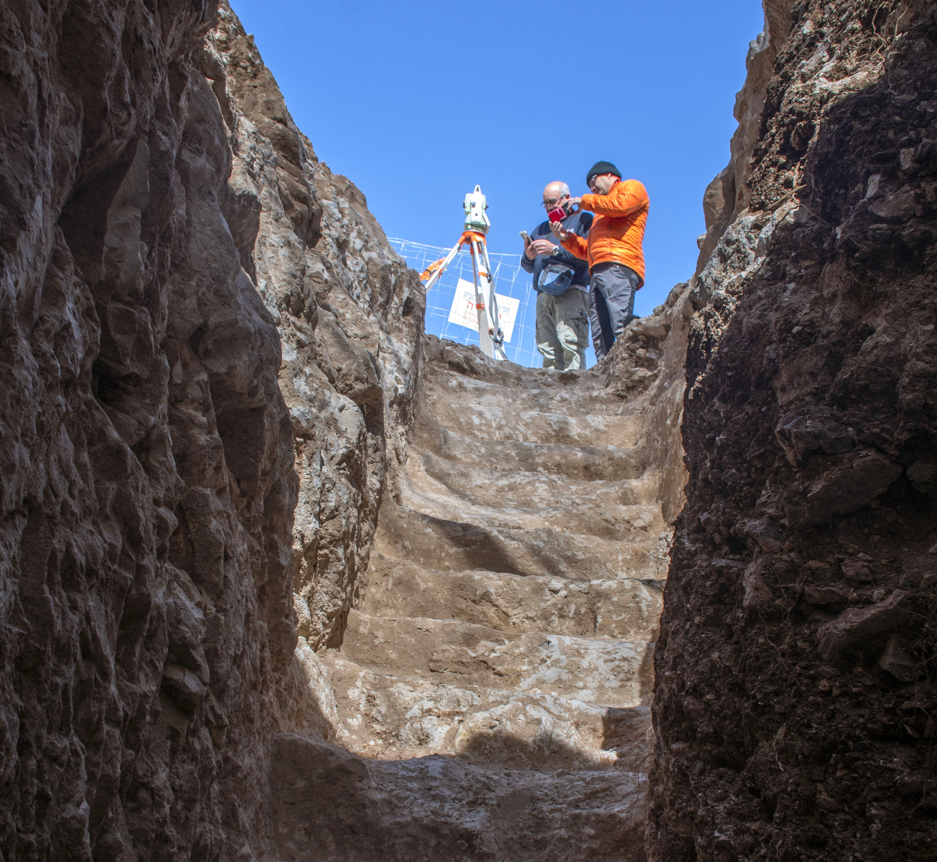
To enter, archaeologists must descend down a staircase leading to a rock-cut opening into the main passage. The tunnel stretches for more than 50 meters (164 feet), measuring 5 meters (16 feet) high and 3 meters (nearly 10 feet) wide – spacious enough in parts to comfortably drive a school bus through.
While sections of the tunnel have collapsed, others are choked with thick layers of soil that have accumulated over hundreds, perhaps thousands, of years. It appears to have been dug out by humans, not natural processes, but little else is known about its origins for now.
“The quarrying was executed meticulously. It is clear that whoever carved this tunnel invested tremendous effort, careful planning, and possessed the capabilities and resources necessary to achieve this goal,” noted Mizrahi and Matskevich.
The team initially thought it might be an ancient water tunnel that connected to a nearby spring. However, a group of geologists shut down this idea, noting the absence of underground water sources in the local area. Furthermore, the tunnel walls lack any plastering, so they wouldn’t be very effective at transporting water.
The leading theory suggests the site was a mine-like burrow excavated to reach a deep chalk layer, either to quarry building stone or to produce lime. However, further excavation is required to confirm that hypothesis.
“The date of the tunnel is also a mystery to us, since not even the smallest find was uncovered that could indicate when it was created,” said Mizrahi and Matskevich.
“At the same time, the tunnel lies only a few hundred meters, as the crow flies, from two significant ancient sites - a public building from the Iron Age (First Temple period) in the Arnona neighborhood, and Tel Ramat Rachel, where settlement remains dating from the Iron Age through the Islamic period have been documented.”
If the tunnel belongs to that era, it could be 2,500 to 3,000 years old, dating back to a time when, at least according to the Old Testament, Israel became a centralized kingdom under King David, who united the tribes of the region and established Jerusalem as his capital. It is supposed to have been a golden age of monumental royal architecture – and, apparently, mysterious tunnels.
“This discovery joins many others being uncovered every day, hour by hour, throughout the city. The archaeologists and researchers of the Israel Antiquities Authority are constantly at work, because this city never ceases to surprise. Usually, we have explanations for the discoveries we uncover, but sometimes, as in this case, we stand astonished and amazed,” concluded Amit Re’em, Jerusalem District Archaeologist at the Israel Antiquities Authority.