Humans
 PUBLISHED


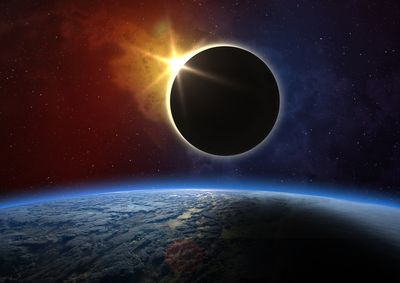


As North America prepares to be dazzled by a "ring of fire" eclipse this weekend, observers in the Yucatan Peninsula and other parts of southern Mexico will walk in the footsteps of the ancient Maya, who were famed for their astronomical expertise. Among the many celestial events tracked and celebrated by the pre-Hispanic culture were eclipses, several of which are commemorated on Maya monuments.
In a recent post by the Mexican National Institute of Anthropology and History (INAH), archaeoastronomer Ismael Arturo Montero García from the University of Tepeyac explained that “The Maya, great observers, had a deep knowledge of celestial mechanics and a high certainty in predicting eclipses.” However, unlike modern astronomers, Maya experts had no telescopes or other gadgets to assist them in their calculations, and were unable to record any events that were not visible from their home.
For this reason, Montero García estimates that the Maya were capable of predicting around 55 percent of eclipses – which is still a pretty impressive figure considering their lack of modern technology. “How come they were able to predict them? Because there can’t be a solar eclipse except during a New Moon, and there can’t be a lunar eclipse unless it's a Full Moon,” he explained.
“On this basis, a certain degree of prediction can be made, taking into account discrepancies which require adjustments, as is demonstrated in the Dresden Codex,” continues Montero García. Dating back to the 11th or 12th centuries, this ancient Maya manuscript contains a series of astronomical tables that were used to track the movement of heavenly objects.
One of the signs denoting an eclipse can be found on page 54 of the Dresden Codex, and consists of a celestial band, the Sun, two femurs, and black and white fields that resemble butterfly wings. In the Mayan language, such events were referred to as Pa’al K’in, meaning “broken Sun”, while the Nahua-speaking Aztecs used the term Tonatiuh qualo, or “the Sun is eaten”.
Today, we know that the Sun is neither devoured nor damaged during a solar eclipse, but that it is simply obscured when the New Moon crosses the plane of the Earth’s orbit. This typically occurs every 177 days – a period known as an eclipse season.
Within the Dresden Codex are tables and almanacs divided into intervals of 177 and 148 days, which are associated with solar and lunar eclipses. The accuracy of these readings helps to illuminate the astronomical proficiency of the Maya, who came to understand the cyclical nature of certain events with an astounding level of detail.