Humans
 PUBLISHED
 2
2


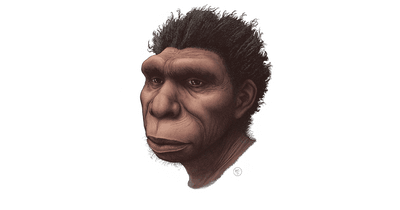


In a bid to streamline the muddled story of human evolution, an international team of scientists has put forward the case for classifying a new species of extinct human, Homo bodoensis, that’s a direct ancestor of us, modern humans.
Reported in the journal Evolutionary Anthropology Issues News and Reviews, their new identification is a reassessment of existing fossils found in Africa and Eurasia that date to 774,000 to 129,000 years ago, an important time period that saw the emergence of our own species (Homo sapiens) in Africa and the Neanderthals (Homo neanderthalensis), our closest relatives, in Europe.
This period, the Middle Pleistocene, is often called the “muddle in the middle” since so many of the species classifications are doubted and disputed. Miles away from the classic "Evolution of Man" diagram, the current understanding of human evolution is not a tidy family tree, but an interwoven and messy journey with gaping gaps in knowledge. That’s especially true for this period — which the researchers of this latest study hope to clear up.
The team argues that many Eurasian and African fossils from the Middle Pleistocene have previously been labeled as Homo heidelbergensis — thought by some to be the most recent common ancestor between modern humans and Neanderthals — or Homo rhodesiensis — a very similar species to H. heidelbergensis. In the new study, the team put forward the idea that most of these fossils could simply be defined as the species H. bodoensis instead.

They argue that H. heidelbergensis is a redundant label as many have been found to be early Neanderthals, not a parent species of modern humans and Neanderthals. Furthermore, the name doesn’t take into account other fossil hominins from East Asia around this time. Equally, the label H. rhodesiensis has remained poorly defined and not widely accepted by palaeoanthropologists. The name has also raised some controversy due to its association with Cecil Rhodes, a notorious 19th-century British imperialist, mining magnate, and politician who played a major role in the horrors of colonial southern Africa. The name, bodoensis, references a location where one of the fossils was discovered in Bodo D’ar, Ethiopia.
Under the new classification, H. heidelbergensis and H. rhodesiensis will effectively be scrapped. Instead, H. bodoensis will be used to describe most Middle Pleistocene humans from Africa, as well as some in Southeast Europe. The remaining fossils in Eurasia could be reclassified as Neanderthals, the team contends.
Certainly, not everyone is set to agree with this “one size fits all” approach. However, the team argues it’s a necessary step to iron out this “muddle in the middle” and make it easier to communicate about this important time in hominin history.
“Talking about human evolution during this time period became impossible due to the lack of proper terminology that acknowledges human geographic variation,” Dr Mirjana Roksandic, lead study author and palaeoanthropologist at the University of Winnipeg, said in a statement.
“Naming a new species is a big deal, as the International Commission on Zoological Nomenclature allows name changes only under very strictly defined rules. We are confident that this one will stick around for a long time, a new taxon name will live only if other researchers use it.”
An earlier version of this article was published in October 2021.