Humans
 PUBLISHED
 1
1


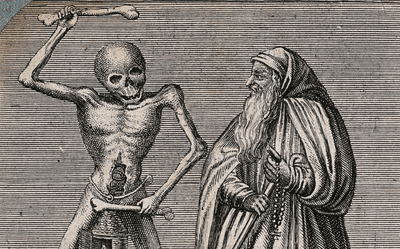


In 18th-century England, an unwashed, bearded old man living at the bottom of your garden was the must-have fashion accessory for wealthy elites. The hermits-for-hire would be encouraged to dress as a druid and made to live in a makeshift grotto on the property where the landowner could care for them, conversate with them, or simply view them for their entertainment.
Heaps of information about this strange existence can be found in The Hermit in the Garden: From Imperial Rome to Ornamental Gnome written by Gordon Campbell, an Emeritus Professor of Renaissance Studies at the University of Leicester in the UK.
Professor Campbell’s book explains how this practice may seem ridiculous, comical, or perhaps cruel by today’s standards, but it was a very serious matter in the Georgian era.
Needless to say, being an ornamental hermit sounds like a pretty miserable job. The position was often assigned to agricultural workers or people whose job was to maintain the estate’s garden. Along with acting like a weird mix of a pet, a confidant, and a servant, the hermit was there to act as a living embodiment of melancholy for the rich and privileged.

A description of a stately home in Shropshire published in 1784 explains how the property features a "well-designed little cottage, which is a hermit's summer residence.”
"You pull a bell, and gain admittance,” it adds. “The hermit is generally in a sitting posture, with a table before him, on which is a skull, the emblem of morality, an hourglass, a book, and a pair of spectacles. The venerable barefooted Father, whose name is Francis, (if awake) always rises up at the approach of strangers. He seems about 90 years of age, yet has all his senses to admiration. He is tolerably conversant, and far from being unpolite."
Another account from 1797 reads: ”The hermit is never to leave the place, or hold conversation with anyone for seven years during which he is neither to wash himself or cleanse himself in any way whatever, but is to let his hair and nails both on hands and feet, grow as long as nature will permit them”.
The origins of hired hermits are unclear, but Campbell said it can be loosely traced back to the Roman emperor Hadrian and his villa at Tivoli, present-day Italy, which featured a secluded structure built for a single person to retreat and meditate in.

The 18th-century craze of hired hermits is often credited to Charles V (1500 to 1558 CE), the Holy Roman Emperor and King of Spain, who spent some of his last years on Earth in a monastery that was home to an order of hermit monks. Thanks to this royal approval, it became somewhat in vogue to give up earthly possessions, dedicate your life to spiritual reflection, and become a hermit.
Whatever its origins, the practice had almost totally disappeared by the 19th century. As Campbell’s book explains, “the garden hermit evolved from the antiquarian druid and eventually declined into the garden gnome.”
The figure of the garden gnome became especially popular in late 18th-century Germany. While it’s considered to be a reference to the mythological European idea of unseen “little people” who dwell underground, Campbell believes the garden gnome is also a nod to the bearded old dudes who once lived as hired hermits.