Health and Medicine
 PUBLISHED
 4
4


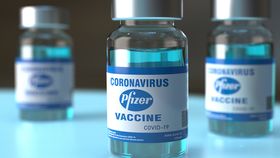


The Pfizer-BioNTech vaccine currently being rolled out across the world is extremely effective after just one dose, concludes a new safety and efficacy analysis. Despite early reports of just 52.4 percent efficacy, the letter finds the BNT162b2 vaccine has a single-dose efficacy of 92.6 percent, providing hope for the millions that have been inoculated with just one dose across the world.
During the first rollout of the vaccine, the UK became the first nation to split the recommended two doses into single-dose therapies that could then be delivered to double the people, with the second dose being delayed significantly. The idea was that a lower efficacy, spread across more of the population, would provide a form of herd immunity that would prevent the spread of COVID-19. Both the vaccine manufacturers and experts were quick to call out the approach, which had almost no evidence supporting it, but the UK surged ahead and has now vaccinated almost 16.9 million people with a single dose.
However, the latest report now suggests that the initial efficacy reports were wrong, and the first Pfizer-BioNTech vaccine dose provides significantly higher protection.
“The authors also report a vaccine efficacy of 52.4% from after the first dose to before the second dose, but in their calculation, they included data that were collected during the first 2 weeks after the first dose, when immunity would have still been mounting.” write the authors of the new report, discussing the initial reports.
The results were written in a correspondence on the New England Journal of Medicine, updating a previous study from December 31, 2020.
With an efficacy of 92.6 percent, this lands the vaccine as the current leader in single-dose protection, edging out the 92.1 percent reported for the Moderna vaccine.
The authors now call for a reconsidering of the vaccine strategy in the US, suggesting that such high efficacy calls into question the use of a second dose for these specific vaccines, which are under short supply.
“Given the current vaccine shortage, postponement of the second dose is a matter of national security that, if ignored, will certainly result in thousands of Covid-19-related hospitalizations and deaths this winter in the United States – hospitalizations and deaths that would have been prevented with a first dose of vaccine.” the letter continues.
While the results are extremely promising, conflicting evidence still exists that one dose may not be enough. An article published on January 22 on the Pfizer-BioNTech vaccine rollout in Israel suggests that one dose has only reduced COVID-19 cases by 33 percent among those vaccinated, contradicting both the 52.4 percent result and the latest 92.6 percent efficacy numbers. These results have not been peer-reviewed yet and need to be verified, but are cause for concern for nations using the single-dose approach.