Health and Medicine
 PUBLISHED


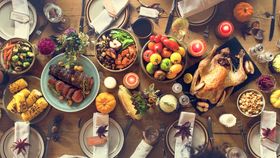


The season of eating ridiculous amounts of turkey is upon us. As millions of people flock home for Thanksgiving today, you might have a curious urban myth on your mind that says eating turkey makes you sleepy.
Whoever told you this might have had one too many eggnogs. Although they're not strictly wrong, it isn’t just the turkey making you sleepy.
Many people claim this post-turkey lethargy is caused by the amino acid tryptophan. According to the theory, turkey is particularly high in this sleep-inducing amino acid, meaning it’s no wonder you're in a food coma by 6pm.
Tryptophan is a component of serotonin, which is then turned into melatonin, the hormone that controls your sleep and wake cycles. Your body is unable to make tryptophan itself, so it can only obtain it through your diet. It is found in many protein-rich foods, such as nuts, seeds, cheese, eggs, fish, and poultry. As such, it does have a mild sedative-like effect on the body when ingested.
The real reason your Thanksgiving or Christmas dinner sends you into a heavy slumber is more likely the sheer excessive amount of carbohydrates, meat, and alcohol you consume.
Scientifically speaking, a "food coma" is known as postprandial somnolence.
After a hefty meal, blood rushes to your gut in a desperate bid to digest and metabolize all the food. In theory, this would mean less oxygenation of the brain and other parts of the body, resulting in doziness. However, not all scientists believe this is the case.
It's more likely to be due to a complex cocktail of biochemistry. A feast rich in potatoes, pumpkin, yams, and deserts also contains a hell of a lot of carbohydrates, sending your blood sugars levels into chaos. This means your body ups its levels of insulin, which also removes most amino acids from the blood except tryptophan. Without other amino acids in the way, it’s easier for tryptophan to pass through the highly-selective blood-brain barrier, form serotonin, and then melatonin.
Here’s the thing: turkey is no higher in tryptophan than any other poultry. In fact, chicken has slightly more of the stuff pound for pound. Nevertheless, many other tryptophan-rich foods, of which they are many in a Thanksgiving meal, manage to escape the blame.
Additionally, just like all of the good things in life, our body’s reward system will give us a healthy dose of serotonin after a hearty meal, a chemical that can make us feel content and sleepy among other things.
So, in sum, skipping on the turkey won't necessarily help you avoid the late afternoon lull. Most carb-heavy, meat-rich, overfilling meals are going to have the same effect. Those five glasses of wine you had a lunchtime probably aren't going to help either, but cheers!