Health and Medicine
 PUBLISHED


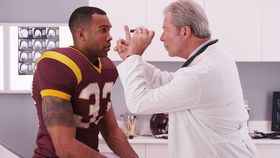


As the serious long-term consequences of “minor” brain injuries become recognized, the need for better concussion tests becomes more obvious. In the absence of scanning devices beside every sporting field, a new blood test that reveals brain injuries may be the answer, indeed it may even do better than CT scans, while potentially being much cheaper.
Weeks ago the cricketing world watched in horror as Australian batsman Steve Smith was felled by a speeding delivery to the neck, crumpling to the pitch before retiring hurt. Smith’s return later in the innings prompted heavy criticism of the doctors who approved it. To most observers it looked like he shouldn’t be out there, an impression re-enforced when he missed the next match.
The event highlighted the difficulties of diagnosing concussion injuries, and the importance of doing so, because sending a concussed player back onto the field can turn a temporary problem into something long-term. With 4.8 million Americans visiting ERs for suspected concussion each year, the problem extends far beyond elite athletes.
Professor Geoff Manley of the University of California, San Francisco, is using the fact that some proteins are released into the blood after a traumatic brain injury (TBI) to seek a quick and reliable solution.
In The Lancet Neurology Manley reports such tests may not only outperform the cognitive tests used by sports doctors, not to mention the old “how many fingers am I holding up?”, but the CT scans frequently used in hospitals.
When assessing brain injuries, MRI scans are the gold standard, but these are expensive and slow, even for hospitals that have the equipment. CT scans are quicker, cheaper, and more widely available, but they miss some TBIs.
Manley tested blood from 450 patients with a suspected TBI but a clear CT scan looking for glial fibrillary acidic protein (GFAP), a suspected biomarker for brain damage. Two weeks later the same patients were assessed with an MRI.
Although the blood test didn’t predict MRI results perfectly, patients in the highest quintile for GFAB were eight times as likely to have a brain injury (64 percent to 8 percent) as those in the lowest quintile. Since the test took just 15 minutes and was done using a hand-held i-STAT Alinity device the results demonstrate this sort of blood testing can be widely available.
"Having these sensitive tools could provide physicians more real-time, objective information and improve the accuracy of detecting TBI,” Manley said in a statement.
Abbott, the company that makes the i-STAT Alinity, is seeking to improve the precision of its test by looking for additional markers to combine with GFAP readings. Even without such progress, however, Manley’s results suggest GFAP could be a good initial triage device to assess patients for further testing.


 2
2