Humans
 PUBLISHED
 1
1


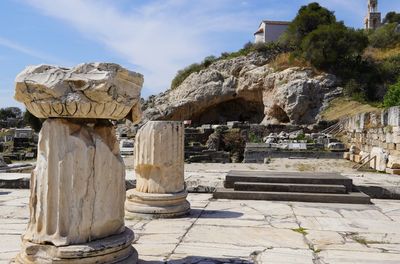


For over a thousand years, people from across the Mediterranean flocked to the temple of Eleusis in Greece to take part in a ritual so secretive that anyone caught talking about it was immediately sentenced to death. Known as the Eleusinian Mysteries, this cult-like practice is thought to have involved the use of mind-altering drugs, and scientists may now have finally figured out which substance was supplied to initiates.
The Eleusinian Mysteries – A Little Background
Held every year around the autumn harvest, the Eleusinian Mysteries were rooted in a seventh-century oral tradition known as the Homeric Hymn to Demeter. In this narrative, Demeter – the Greek goddess of nature and fertility – enters a cave at Eleusis in search of her daughter Persephone, who had been abducted by Hades and dragged down to the underworld.
Mimicking this quest to bring Persephone back, the ritual marks the continual cycle of death and rebirth upon which agriculture relies. To honor this life-giving pattern, rites were held in Athens at harvest time, culminating in a procession along the so-called Holy Way, which led from the Sacred Gate all the way to Eleusis, some 30 kilometers (20 miles) to the west.
Upon arrival, huge numbers of initiates would enter an enormous hall known as the telesterion, where priests would administer the Eleusinian Mysteries. However, while participation was open to all Greek-speaking men and women, regardless of their social status, talking about what went on inside the telesterion was strictly forbidden, on pain of death.
Eventually, the temple was destroyed by the Persians in the fourth century CE, bringing an end to the Eleusinian Mysteries. And with no record of what it entailed, the details of this esoteric rite were lost to history.
What We Know About The Ritual
The Homeric Hymn to Demeter mentions the consumption of a drink containing barley and mint, although many historians think the rite itself was performed with some kind of psychedelic substance. Despite the strict ban on talking about the practice, a few vague sources mention the use of concoctions that induce ego death and a feeling of rebirth, although there’s no clear indication of what ingredients they contained.
Chances are that this sacrament didn’t include opium, as this was commonly used in ancient Greek medicine and was therefore not secret enough for the Mysteries. Psilocybin is also an unlikely candidate, as magic mushrooms could not be cultivated back then.
One popular theory is that hallucinogenic ergot alkaloids, produced by a pathogenic fungus called Claviceps purpurea, might have been the secret sacrament used during the Eleusinian Mysteries. Support for this idea comes from the discovery of such alkaloids on pottery and in dental calculus at another Eleusinian temple in Mas Castellar de Pontós.
However, ergot also contains highly toxic peptides that can cause seizures, gangrene, and death in those who ingest it. Known as Saint Anthony’s Fire, the syndrome produced by accidental ergot consumption has been responsible for several mass tragedies throughout history, including one outbreak in Paris, which killed around 50,000 people in 1418.
Could Ergot Have Been Used In The Eleusinian Mysteries?
To determine if ergot alkaloids could conceivably have been administered to initiates without killing them, the authors of a new study sought to discover if these toxins could have been removed by ancient priests. To do so, they soaked Claviceps purpurea mycelial masses in a lye solution made of water and ash.
After two hours, they found that the toxic ergopeptides had all been eliminated, while the ergot alkaloids had been converted into psychoactive compounds like lysergic acid amide (LSA). Though not as strong as LSD, this somewhat similar molecule is known to produce psychedelic effects, and is thought to have been used in ancient Aztec rituals involving sacraments made from morning glory seeds.
“Our findings demonstrate that toxic ergopeptides can be chemically transformed into psychoactive substances through an ancient process involving reaction in lye, a technique that could have been employed by the ceremonial priestesses of Eleusis,” write the study authors. They conclude that ergot could indeed have been the secret psychedelic used in the Eleusinian Mysteries, and suggest that the fungus may have been harvested from infected barley.
The study has been published in the journal Scientific Reports.