Technology
 PUBLISHED
 1
1




A team of scientists from King’s College London, Swansea University, and collaborators in Chile say that they have found a way to reverse cracking in bitumen, paving the way toward the sci-fi dream of self-healing roads.
Potholes are a bit of a problem, causing damage to cars at a cost of around $3 billion a year for US drivers, or around $306 per driver per year. In the UK, where people like to complain loudly about such matters, the cost is around £143.5 million per year, before you even factor in the costs to local journalists forced to photograph annoyed local men standing beside them and frowning.
Reducing this cost would be a boon for road users, as well as the environment. One team working on the problem say that they have found a solution of sorts, which involves getting the road to heal itself after it cracks.
These cracks happen when bitumen – the sticky, black, and gooey material used in asphalt – hardens when exposed to oxygen. The precise mechanism behind this is unknown, but the team has been working on machine-learning techniques to gain a better understanding of it.
"Complex molecular organic fluids such as bitumen, lubricants, crude oil, or biobased oils from biorefineries are intrinsically challenging to model with molecular precision, given the large variety and complexity of organic molecules in their composition," the team explains in one paper. "To address this limitation, we have developed an author-agnostic computational framework to generate data-driven representative models of any complex mixture of organic molecules directly from Gas Chromatography-Mass Spectrometry (GCMS) experimental characterisation, thus reducing human biases in model creation and providing a platform for self-driven digital development of molecular organic fluids."
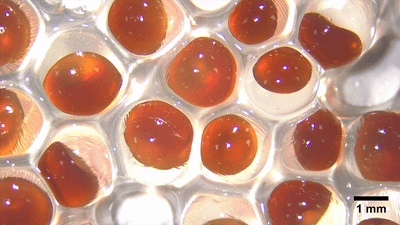
The solution the team came up with, and tested in laboratory experiments yet to be published, involves using tiny, "extremely resistant biobased spores" smaller than a strand of human hair. These porous materials are filled with recycled oil-based "rejuvenators" which are released when the asphalt begins to crack, reversing the process.
“In our research, we want to mimic the healing properties observed in nature. For example, when a tree or animal is cut, their wounds naturally heal over time, using their own biology," Dr Francisco Martin-Martinez, an expert in Computational Chemistry at King’s College London, said in a statement sent to IFLScience. "Creating asphalt that can heal itself will increase the durability of roads and reduce the need for people to fill in potholes."

As well as saving on the cost of pothole repair, the self-healing roads could help with environmental costs of road use.
“We are also using sustainable materials in our new asphalt, including biomass waste. This will reduce our dependence on petroleum and natural resources," Martin-Martinez explained. "Biomass waste is available locally and everywhere, and it is cheap. Producing infrastructure materials from local resources like waste reduces the dependence on petroleum availability, which helps those areas of the world that have limited access to petroleum-based asphalt.”
Laboratory experiments yet to be published showed that the innovative approach was able to heal a "microcrack" in an asphalt surface in under an hour, completely forgoing the usual process of angry locals complaining in their local paper until the local council comes around to repair the problem several months down the line. Though it is promising, further research and investment are needed before it can be incorporated, and roads begin to heal themselves.