Nature
 PUBLISHED


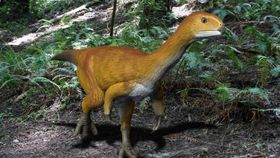


With a body like that of a Velociraptor but with teeth like that of a benign herbivore, a strange dinosaur discovered in 2015 has defied classification. Now, researchers think they may have finally placed the "Frankenstein" dinosaur Chilesaurus on the evolutionary tree, and they believe it represents a transitional fossil between carnivorous and herbivorous beasts.
It all comes down to the animal's hips. While the head and body of Chilesaurus looks like that of a carnivorous therapod, the hip of the creature is far more similar to that of a large plant-eating dinosaur, such as Triceratops, Stegosaurus, and Iguanodon, which are known as the "bird-hipped" dinosaurs.
These large herbivores share many common traits in addition to the bird-like hip structure, such as a beak that aids in tearing up leaves and plants. It is also thought that the different hip structure means there is more space in the body cavity for the large gut necessary for an herbivorous lifestyle. But while Chilesaurus had bird-like hips, it lacked many of the other traits such as the beak.

After analyzing over 450 different anatomical characteristics of early dinosaurs, the researchers from the University of Cambridge and Natural History Museum have finally placed the bizarre beast on the dinosaur evolutionary tree – and in an incredibly important position no less. It seems to be a transitional fossil between the bird-hipped and lizard-hipped, revealing that the gut of large herbivorous dinosaurs likely evolved first and that the beaks came later.
“Chilesaurus is one of the most puzzling and intriguing dinosaurs ever discovered,” says Professor Paul Barrett, who co-authored the paper published in Biology Letters, in a statement. “Its weird mix of features places it in a key position in dinosaur evolution and helps to show how some of the really big splits between the major groups might have come about.”
The placement of the hodgepodge dinosaur comes after the same team completely shook up the dinosaur tree earlier in the year. Before this rearrangement, where therapod dinosaurs like Tyrannosaurus rex were found to be more closely related to plant-eating dinosaurs like Stegosaurus (rather than sauropods like Brachiosaurus), Chilesaurus was seen as an oddball that didn't fit into the dinosaur family tree.
Now, however, it seems to have finally found its place.