Space and Physics
 PUBLISHED
 3
3



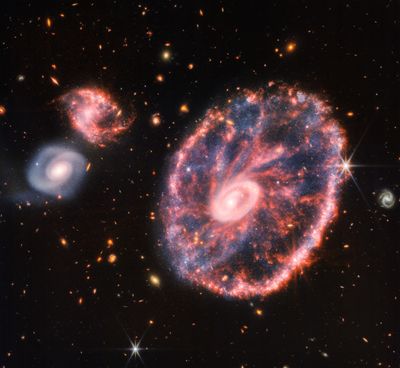


The stunning observation of the Cartwheel galaxy by JWST has revealed the exceptional ability that the latest space observatory has. The birthplace of new stars, the hot gas, and the activity of the supermassive black hole are all shining in this incredible photograph. But there’s more. Now you can sit back, relax, and fly towards that galaxy like a starship captain thanks to a video reconstruction that takes you from here to there.
It is located 500 million light-years away and you’ll start by passing a lot of nearby stars and the odd galaxy until the cartwheel galaxy and some near and far galaxies come into view and get closer and closer. The released image itself was incredible but seeing in the video how a little speck of darkness becomes a galaxy 145,000 light-years across is absolutely mind-blowing.
The Cartwheel is a galaxy merger. It underwent a bullseye-style collision with a smaller companion within the last one billion years, causing the spiral arms that would be expected for such a galaxy to disappear into two expanding circles. And the “spokes” are the galaxy slowly trying to reform its normal spiral shape. This is a process that will last for millions of years so we can continue to enjoy the incredible object for a long time yet.