Culture and Society
 PUBLISHED


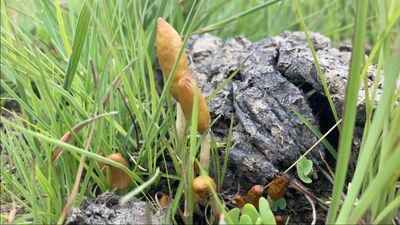


For the first time ever, researchers have documented a traditional healing practice involving the use of psychedelic mushrooms on the African continent. Performed by Indigenous diviners and spiritual curers in Lesotho, the ritual involves a species of mushroom that is brand new to science.
Discovered growing on a cow manure-covered pasture in the Free State Province of South Africa in 2021, the mushroom is one of two new species of psychedelic fungi described in a new paper. Known as Psilocybe maluti, the previously unknown shroom belongs to the famous Psilocybe genus, which contains around 140 different species worldwide.
The second newly-described mushroom was found on another cow-pat-littered grassland in the Kwa-Zulu Natal Province of South Africa. Together, the pair of novel shrooms bring the total number of known Psilocybe species in Africa to six, although the study authors insist that “there are undeniably more South African species that have yet to be discovered”.
“The discovery of new species from Africa is unsurprising, considering the lack of studies in mycology on the African continent,” they add.
Yet while the existence of African shrooms may not be unexpected, the historic use of these mind-altering fungi is largely unknown in this part of the world. So far, the only evidence for the Indigenous consumption of psilocybin comes from 8,000-year-old murals found on cave walls in Tassili in the Sahara Desert, which have been tentatively interpreted as depicting Psilocybe mushrooms.
However, after following the trail of newly-discovered P. maluti mushrooms through the Kingdom of Lesotho, the study authors observed local Basotho healers using the species for healing purposes, in a ritual that “has been passed down through generations.” According to the researchers, the mushroom is utilized by two different types of Basotho shaman, the first of which is known as “linohe” and is described as “the equivalent of a diviner or soothsayer” who can “foresee the future” in the visions triggered by the hallucinogenic shroom.
The other is called “ngaka-chitja”, and specializes in herbal medicine but lacks any powers of divination. To harness the mushroom’s effects, these healers steep P. maluti in warm water along with another hallucinogenic plant called Boophone disticha, producing a potent psychoactive tea known locally as “seipone sa koae-ea-lekhoaba”.
During rituals, this mind-bending brew is “consumed by the patient, who is then placed in front of a reflective surface and relays the hallucinations/visions seen in the reflection to the healers who interpret these as answers to the patient’s spiritual questions.”
“This appears to be the only recorded firsthand report of hallucinogenic mushrooms being used traditionally in Africa and the first mention of hallucinogenic mushroom use in Sub-Saharan Africa,” conclude the authors.
The study is published in the journal Mycologia.