Space and Physics
 PUBLISHED
 2
2






In the next few years, we will see some incredible observatories comie online. The Vera Rubin Observatory's science campaign is about to start. The Square Kilometer Array will have its first light next year, and the Extremely Large Telescope will be completed and operational by March 2029. Now, Schmidt Sciences has announced plans for four observatories, all coming online by 2029, including the first-ever private space telescope.
The four facilities will be known as the Eric and Wendy Schmidt Observatory System, after the founders of Schmidt Sciences, former Google CEO Eric Schmidt and his wife, Wendy Schmidt. The four facilities will look at the universe in optical, infrared, and radio waves and will provide new insights into the mysteries at the cutting edge of astronomy.
“I'm an astronomer by background, and of course, there are never enough instruments,” Pete Worden, Senior Advisor at Schmidt Sciences, former NASA Ames director, and chairman of The Breakthrough Prize Foundation, told IFLScience.
Four Telescopes, One System
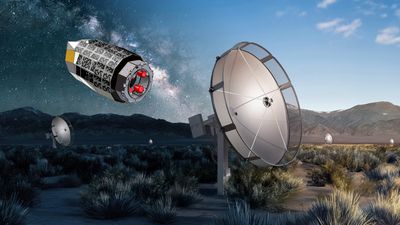
The four observatories are the Argus Array, the Deep Synoptic Array (DSA), the Large Fiber Array Spectroscopic Telescope (LFAST), and the space telescope Lazuli. Argus, similar to Rubin, will create a movie of the whole sky every night, collecting 7.8 petabytes of data each day. It will be made of more than 1,000 small telescopes connected in such a way that they will act like an observatory with an 8-meter mirror, putting it on a par with some of the leading ground-based observatories operating today.
LFAST is another array of small telescopes, although not quite as small as the Argus ones, that will be formed into subarrays and act like a 3-meter-mirror telescope. LFAST will be able to perform spectrometry, breaking down the light of distant objects into its constituent wavelengths, revealing chemical signatures and more. The goal for LFAST is to be scalable, adding more subarrays with a long-term aim of being on par with a 30-meter-class telescope.
DSA will instead focus on radio signals. Thanks to 1,650 radio antennas and their distribution on the ground, together with dedicated graphics processing units, the observatory will be delivering real-time images of the "radio sky" without the need for intensive data processing after the observations.
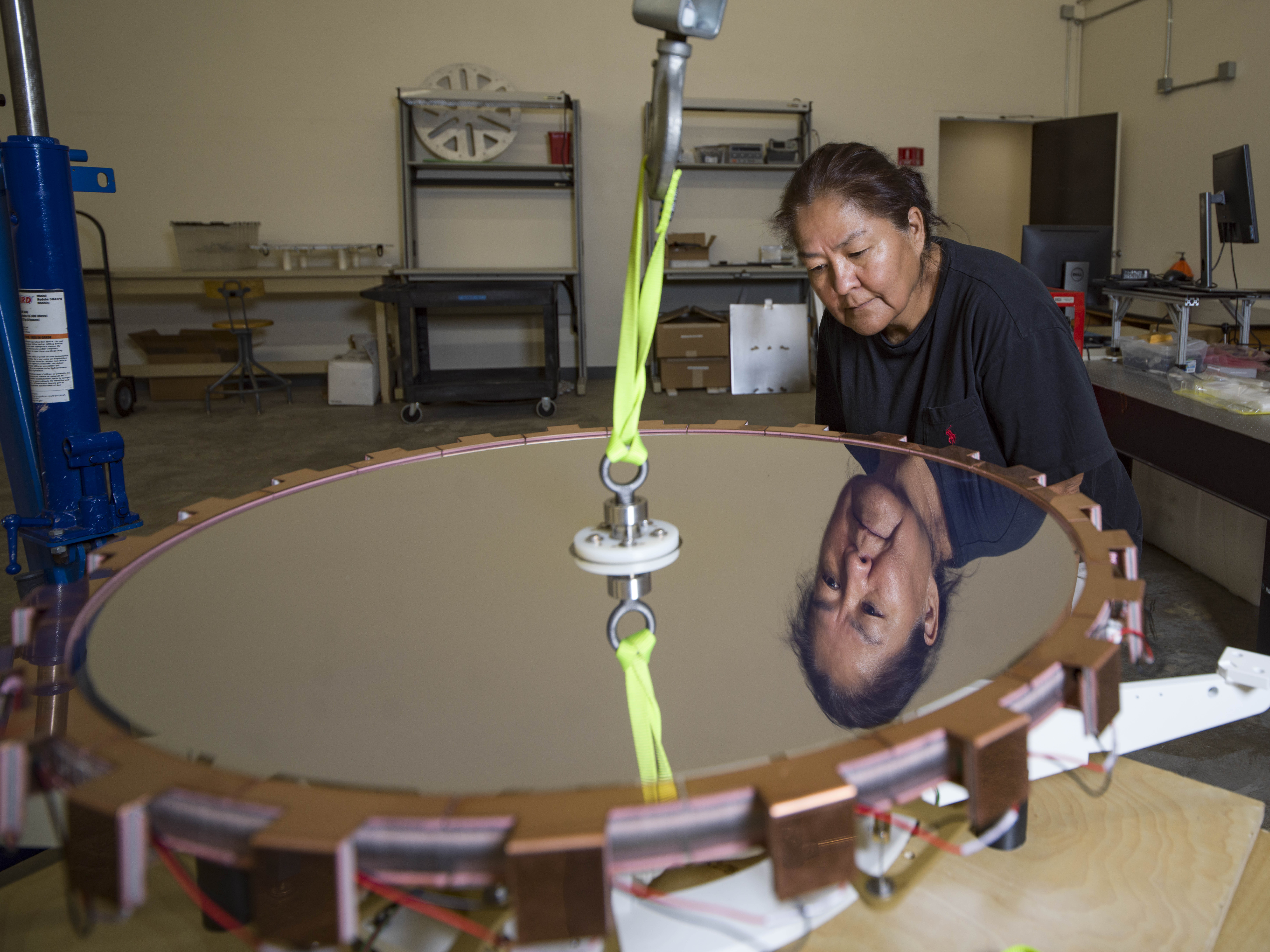
These three observatories are already exciting, but the cherry on top was the announcement of Lazuli, a new space telescope, at the American Astronomical Society winter meeting on January 6. It will have a mirror larger than Hubble and an imager to observe the sky in 23 colors, from optical to infrared. It will also have a spectrograph and a coronagraph so it will be able to see the composition of nearby star systems as well as block out excessive starlight, hopefully allowing it to see orbiting worlds a bit smaller than Neptune.
All four telescopes will produce open data that everyone can access, and it will be available minutes after it has been collected. Astronomers will have to apply for time on LFAST and Lazuli, but the team hopes for applications from all over the world. What’s especially exciting is that the four telescopes can work together, and even Lazuli can be reoriented and pointed in a specific direction in record time for a space telescope.
“Part of why we're calling this a system is because they will be interoperable,” astronomer Arpita Roy, director of astrophysics and space at Schmidt Sciences, told IFLScience. “You find something with Argus, you can seamlessly follow it up with LFAST or Lazuli. There will be software and data centralized for the Schmidt observatories, so you go to one place, and you can get all of the data from the observatories and also hopefully, we think, connect to other datasets as well. So you can cross-analyze Rubin and Argus, for example.”
Risky Bets On Technology That Have Paid Off
The construction of the cutting-edge observatories isn't an easy or cheap undertaking. Still, the fact that Hubble is going strong after nearly 36 years shows that such telescopes are long-term investments. Lazuli has been described as an instrument that can approach Hubble’s capabilities but for a ridiculously low price.
None of the observatories in the Eric and Wendy Schmidt Observatory System will break the bank. The team has spent the last six years testing what they described as “good risky technologies”; tech that had potential to deliver great returns cheaply, and it seems those bets are paying off.
I know this seems like a sudden announcement, but we've been working on this for a while. We're building it for you, for the scientists sitting somewhere without access to telescopes
Dr Arpita Roy
"For 20 years, Eric and I have pursued philanthropy to seek new frontiers, whether in the deep sea or in the profound connections that link people and our planet, committing our resources to novel research that reaches beyond what might be funded by governments or the private sector. With the Schmidt Observatory System, we're enabling multiple approaches to understanding the vast universe where we find ourselves stewards of a living planet," Wendy Schmidt said in a quote shared with IFLScience.
“There are some very exciting problems now, and we really need some new capabilities," said Worden. "It's a real opportunity to actually form a new type of organization that has both ground and space-based instruments to address some of the key science questions that are facing us.” .
The four telescopes bring the exciting promise of discovering and following up transient events, studying other planetary systems in novel ways, and trying to solve deep cosmological mysteries like the Hubble tension. And the goal is to make them happen pretty quickly.
“I know this seems like a sudden announcement, but we've been working on this for a while. We're building it for you, for the scientists sitting somewhere without access to telescopes,” Roy told IFLScience. “My message is they should start thinking about how best to use these resources and to get ready, because it's coming up pretty quickly."
A paper discussing the details of the Lazuli telescope is available on ArXiv.
Correction 22/1/26: This article was updated to correct the spelling of “Schmidt Sciences” throughout and to include the current affiliation for Pete Worden. Amendments were also made to paragraphs 4, 5, and 8 to more accurately reflect the scale of the project and the data availability.