Space and Physics
 PUBLISHED





NASA’s Advanced Composite Solar Sail System is a brand-new technology demonstration of solar sailing. The space agency is not the first to employ this technology but there are new materials, or older materials in new combinations, which require testing in space before larger solar sails are employed in larger missions.
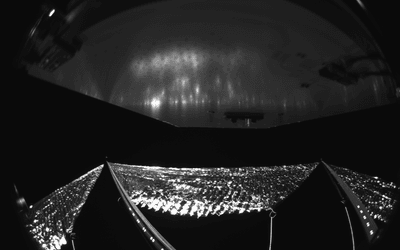
The latest test – which was launched in April – saw the sail deployed last week from a small CubeSat. And now we have a photo. The space agency envisions solar sails as a way to reduce the costs for certain missions, guaranteeing propulsion using the most abundant source of energy in the Solar System: sunlight. But to make it possible, the sail needs to be large and extremely light, hence the need to test the best possible materials for it and the booms.
“The primary objective of the demonstration is to conduct the deployment operation and use it to inform the use of large-scale sails for future missions. The mission team is continuing to analyze the incoming data and prepare for the next steps in the technology demonstration over the next couple of weeks,” NASA wrote in a statement.
It is possible to follow and spot the sail using the NASA App. Despite the CubeSat being not much bigger than an air fryer, the sail ends up being a square with sides of 9 meters (30 feet).
At an altitude much higher than the International Space Station, it catches a fair amount of light from the Sun, even at night, so it is quite bright. But keen observers have noticed that the brightness changes and that’s because the spacecraft is tumbling. This was fully expected.
“As part of the planned deployment sequence, the spacecraft began flying without attitude control just before the deployment of the booms. As a result, it is slowly tumbling as expected. Once the mission team finishes characterizing the booms and sail, they will re-engage the spacecraft’s attitude control system, which will stabilize the spacecraft and stop the tumbling,” NASA explained.
The material of the booms is 75 percent lighter and designed to experience 100 times less distortion due to heat in space compared to previous booms. In the future, they could be employed to deploy a solar sail 25 times larger.