Space and Physics
 PUBLISHED



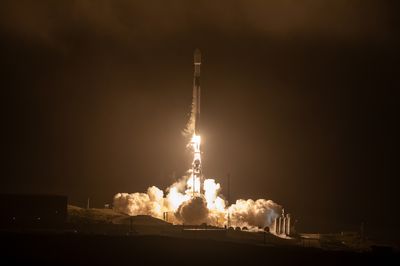


The Kenyan Space Agency has deployed its first Earth Observation Satellite, Taifa 1. Flown on a SpaceX Falcon 9 rocket, the satellite entered solar synchronous orbit – so it passes over every part of the Earth at the same local mean solar time.
This orbit is used for imaging and reconnaissance satellites because the illumination of each part of the Earth as the satellite passes above it is roughly the same. In fact, Taifa 1 will collect agricultural and environmental data. The goal is to have space observations that can better prepare and inform people about droughts, floods, and wildfires. The data will be shared freely among government agencies and used for disaster management and for strengthening food security.
#Taifa- 1 pic.twitter.com/3TshImG9AR— Kenya Space Agency (@SpaceAgencyKE)
“Taifa-1 satellite is fully owned by Kenya and will be operated by Kenyans. The data will also be received and processed in Kenya,” the Kenyan Space Agency wrote in a press statement.
The satellite is a CubeSat made of three units, with a camera that can observe both in the visible spectrum and slightly beyond. It will operate for five years and then fall into the atmosphere and burn completely without falling to Earth. It was designed by nine Kenyan engineers and built in collaboration with the Bulgarian aerospace company Endurosat.
The Kenyan Space Agency chose to launch it on a SpaceX Rocket to improve its affordability, given that the cost is shared among the satellite owners. There were 50 other payloads in this launch.
With the success of Taifa 1, the Space Agency of this important African nation is considering reviving launch capabilities from its own territory. This wouldn’t be the first time: the San Marco platform is a currently unused platform that was developed by the Italian Space Agency – the rockets designed to launch from there no longer exist, but it is in an ideal position for launches, being east-facing and near the equator.
It is currently uncertain if the Kenyan Space Agency wants to revive this one or build its own. What is certain is that Kenya has big ambition when it comes to space and its part in it.