Nature
 PUBLISHED
 3
3


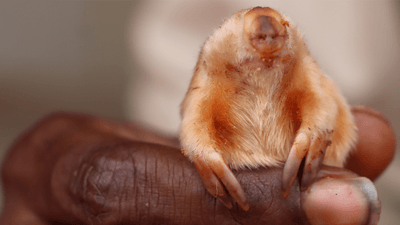


Sometimes we get a glimpse of extremely rare animals that can’t fail to delight. From underwater cuties like the dumbo octopus to a rare pink elephant calf in South Africa, catching a glimpse of something that special brings an extra sense of joy. That is exactly what happened to the Kanyirninpa Jukurrpa (KJ) Martu rangers in Australia as they caught sight of a glorious golden marsupial mole.
KJ Martu Rangers are the Traditional Custodians of a vast area in the Western Desert of the Pilbara in Australia. Martu Country is an arid ecosystem that covers 13.6 million hectares across northwestern Australia.
This is the second sighting of an elusive Kakarratul (marsupial mole) in just six months, write the KJ Martu Rangers on their Facebook page. Kakarratul (Notoryctes caurinus) live in sand dunes and spend almost their entire lives underground, only rarely venturing up to the surface. These tiny critters only measure 12-16 centimeters (4.7 -6.3 inches).
These palm-sized little moles effectively “swim” through the sand and don't make any empty tunnels behind them – instead, they use their nose and forehead as a ram to burrow their way through. These moles feed on insects that they find within the sand, mostly ants and beetle larvae, writes the IUCN.
While the moles are known to be marsupials and specimens have shown up in museum collections, almost nothing is known about their reproductive habits or lifespan because they are so elusive.
The rangers combined their pujiman (traditional) knowledge with modern conservation techniques to look after some of the most threatened species in this area, including the marsupial mole and the night parrot, the northern quoll, and the Pilbara leaf-nosed bat.

These Australia Kakarratul might have luscious blond locks and resemble chicken nuggets wearing Legolas wigs, but they are not the only golden moles out there. In an incredible feat of convergent evolution, South Africa is also home to a chicken nugget-shaped mole that also swims through the sand dunes. The De Winton’s golden mole was rediscovered late last year after not being seen for 80 years.