Health and Medicine
 PUBLISHED


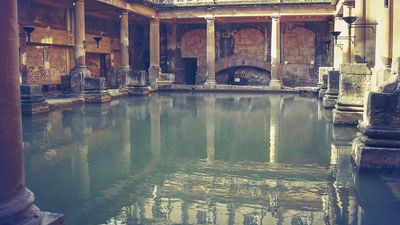


The thermal waters of the iconic Roman Baths in the English city of Bath may hold the key to combating antimicrobial resistance, new research has revealed. After isolating around 300 different microbes living within the famous attraction’s cozy pools, the study authors discovered that 15 of these are capable of inhibiting some of the world’s most worrying pathogens.
Antimicrobial resistance is a major and ever-growing crisis that is estimated to cause around 1.27 million deaths per year worldwide, with this annual toll predicted to rise to 10 million by 2050. The discovery of new natural antibiotics is currently seen as our best hope of neutralizing this escalating threat, although attempts to identify any such products have so far been largely unsuccessful.
To hunt for these novel bacteria-killing compounds, researchers are increasingly focusing on extreme environments such as hot springs, as the peculiar ecosystems found in such environments are likely to contain unique organisms that may have antimicrobial properties.
Given that the Roman Baths are home to the UK’s only thermal spring, the study authors decided to analyze the microbial communities present in the water, biofilm, and sediment at hotspots within the complex – including the King’s Spring, where waters reach around 45 °C (113 °F), and the slightly cooler Great Bath, which has a temperature of about 30 °C (86 °F).
Overall, the researchers were able to isolate 297 distinct types of bacteria, including numerous varieties of Actinobacteria and Myxococcota, both of which are renowned for their production of antibiotics. Initial screening revealed that 92 of these displayed varying levels of activity against the pathogens E. coli and Staphylococcus aureus.
These promising candidates were then tested against the remaining six bacteria that make up the ESKAPE pathogens, which the World Health Organization considers to be in urgent need of novel antibiotic treatments. Overall, 15 of the isolates obtained from the Roman Baths were found to have “broad spectrum activity” against three or more of these pathogens.
Commenting on these findings, study author Dr Lee Hutt explained in a statement that “this study has for the first time demonstrated some of the microorganisms present within the Roman Baths, revealing it as a potential source of novel antimicrobial discovery.”
“There is no small irony in the fact the waters of the Roman Baths have long been regarded for their medicinal properties and now, thanks to advances in modern science, we might be on the verge of discovering the Romans and others since were right,” he adds.
The study is published in the journal The Microbe.


 2
2