Humans
 PUBLISHED


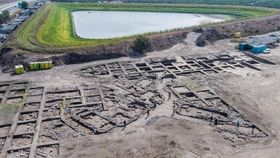


Archaeologists in Israel have unearthed the remains of a vast ancient city that’s being dubbed the "New York of the early Bronze Age."
The site, known as En Ensur, can be found between the cities of Tel Aviv and Haifa in Israel. Now, it’s little more than rubble and rocks, but 5,000 years ago this place was a bustling megalopolis filled with different cultures, weaving streets, public squares, and a towering city wall.
The city spanned over 65 hectares (160 acres) and is estimated to have had 6,000 inhabitants. Archaeologists from the Israel Antiquities Authority think that many people were drawn to the city in large numbers from the countryside thanks to the presence of two abundant water wells found near the settlement.
Despite its immense size, it laid undisrupted here for thousands of years, until it was discovered in 2017 when archaeological excavation took place in preparation for the construction of a new highway interchange. Surprisingly, the team's work also revealed the presence of 7,000-year-old ruins in deeper excavations made beneath this city's houses, suggesting the ancient city was built on top of an even older settlement.
The recent excavation work uncovered millions of pottery fragments, flint tools, and basalt stone vessels that were brought to the site, giving a clear indication of the many cultures that once mixed here.
Sifting through the dust and rubble, they were also able to get hold of some insights into the spiritual life of the ancient city’s inhabitants. The work revealed the ruins of a vast temple, surrounded by a public area, and courtyard, and a huge stone basin perhaps used during the performance of religious rituals. Inside this structure, the researchers found evidence of burnt animal bones and rare figurines of humans.
Given the age of the city, combined with its size and level of sophistication, the researchers say this discovery is fairly remarkable.
“There is no doubt that this find radically changes our ideas about the nature of this historical period and the time when urbanization began in the territory of modern Israel. This is an exciting period in the history of the Land of Israel – Canaan of those days – when the nature and lifestyle of the population begins to change dramatically,” said Itay Elad, Dr Yitzhak Paz, and Dr Dina Shalem, excavation officials on behalf of the Israel Antiquities Authority, in a joint statement.
"Such a city could not develop spontaneously, without a guiding hand and administrative leadership. Impressive planning, Egyptian-made tools, and stamp imprints found on the site, confirm this is the case.”


 1
1