Humans
 PUBLISHED
 3
3




The pre-Columbian cultures of the Americas did very few things in half measures, especially when it comes to flamboyant funerary rituals and gruesome dealings with death.
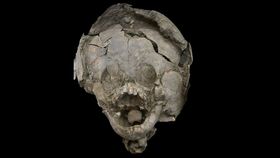
Archaeologists from the University of North Carolina (UNC) at Charlotte recently excavated the skulls of two infants in South America who were buried wearing “headgear” fashioned out of human skulls – a curious funerary ritual that's never been documented before.
"As far as we know, this is the only example of this practice anywhere in the world," Sara Juengst, study author and assistant professor of bioarchaeology at UNC Charlotte, told IFLScience.
"[However], including extra heads in burials is not so uncommon in pre-hispanic South America, either as trophy heads made from enemies, or as ensuring links to ancestors," they added.
As reported in the journal Latin American Antiquity, the two isolated skulls were found in a complex of burial mounds in present-day Ecuador dated to approximately 100 BCE, alongside at least nine other individuals, a number of seashells, stone figurines, and other small artifacts.
One of the infants, estimated to be 6 to 9 months old at the time of death, was found with the skull of another older child, aged between 2 and 12, placed on top like a helmet. The other skull belonged to a slightly older toddler, around 18 months old, and wore the skull of a child aged between 4 and 12.
Stranger still, the team also recovered a seashell and a hand bone from in between the skull and the skull-hat. They also believe that the two skulls were crafted together while they were still covered in flesh, presumably not long after their death, to hold the bones together.
The relationship between the infants and the owners of their skull-helmets is currently unknown too – were they family or perhaps members of a rival group? – although the researchers hope to carry out DNA and isotope analysis to unravel this question.
The time and place suggest the mounds were built by the Guangala, a culture that thrived on the southwest coast of Ecuador from 100 BCE for hundreds of years. However, little is known about the meaning behind this bizarre mortuary ritual since nothing like it has been discovered before.
While the cause of death also remains a mystery, it’s speculated that the children died of malnutrition or illness. This is suspected because the area might have been blasted with a significant volcanic eruption at the time, which could have sprinkled the skies with volcanic ash. Perhaps, the researchers ponder, their morbid helmets were an accessory to protect them from further misfortune.
"We suspect that they were doing this in reaction to some sort of natural or social disaster and are ensuring that these infants had extra protection or extra links to ancestors through their burials," explained Juengst.