Humans
 PUBLISHED
 1
1


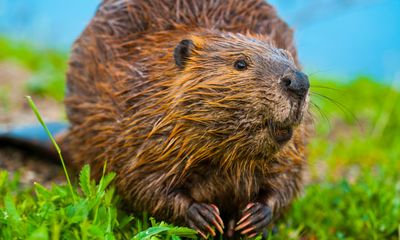


Although pork and beef are some of the most popular meats for modern humans, it’s easy to wonder if the same could be said when we couldn’t just pop to the supermarket to pick them up. Researchers previously thought that humans in the Middle Pleistocene stuck to hunting and eating large mammals – but a recent study has revealed a far smaller, somewhat unexpected item on the menu: beavers.
In examining the bones of at least 94 beavers from 400,000 years ago, excavated from the Bilzingsleben site in Germany, a team of archaeologists uncovered what they described in their paper as “systematic exploitation of beavers” by humans at this time.
Under magnifying glasses and digital microscopes, the beaver bones showed signs of cut marks made by stone tools, something of an unusual find. "Until now, cut marks on Palaeolithic beaver bones had been identified very rarely and on isolated bones only,” said Sabine Gaudzinski-Windheuser, one of the study’s authors, in a statement.
The distribution of the cut marks suggests that humans may have targeted beavers for both their skins and as a source of meat. As for why they took to eating them, it might have something to do with these rodents’ characteristic rotundness. Fat was a pretty important food resource during the Pleistocene and the beaver remains largely belonged to young adults – fully grown and fat-rich, but not yet experienced in dealing with threats, making them an ideal target for hunters.
The study’s findings contradict the previous assumption that humans had a relatively narrow diet until later on in the Pleistocene. "Until now, it was generally thought that people in Europe fed primarily on large game until around 50,000 years ago, and that this was an important difference to the more flexible dietary strategies of modern humans,” said Gaudzinski-Windheuser. “We have now demonstrated that the hominin food spectrum was much broader much earlier."
Gaudzinski-Windheuser also had an explanation for why it may have seemed as though early humans hunted mainly larger animals, such as bovids and rhinoceroses. "The remains of large mammals from this period are generally much better preserved than those of small ones, not to mention plant remains,” said the researcher.
Modern humans are also starting to explore some more unusual food choices on the particularly small side – you might find a bug-based meal on your plate at some point in the near future.
The study is published in the journal Scientific Reports.