Humans
 PUBLISHED



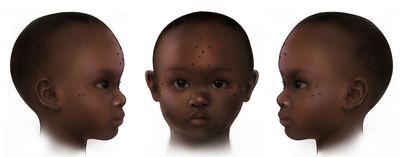


Tattoos have been found on dozens of mummified corpses from the Nile River Valley, indicating that ancient Nubians were no strangers to body art. After the advent of Christianity, these designs were placed in highly conspicuous places, such as the face, with toddlers and babies among those to have been inked.
Previously, around 30 ancient tattooed individuals had been discovered in Nubia, with the earliest of these dated to around 4,000 years ago. However, that number has now almost doubled after researchers used multispectral imaging to identify hard-to-see tats on a further 27 mummies from three different sites.
Dating from 350 BCE to 1400 CE, these individuals span a historical period that saw the introduction of Christianity to ancient Nubia in the seventh century CE. According to the researchers, this transition is marked by a notable shift in the style and prevalence of tattoos on ancient mummies.
Prior to this religious overhaul, tattoos were almost exclusively found on women and were typically discreet and placed on the hands and body. These early designs mainly consisted of crisscrossed patterns or dotted diamonds arranged in repeating motifs.
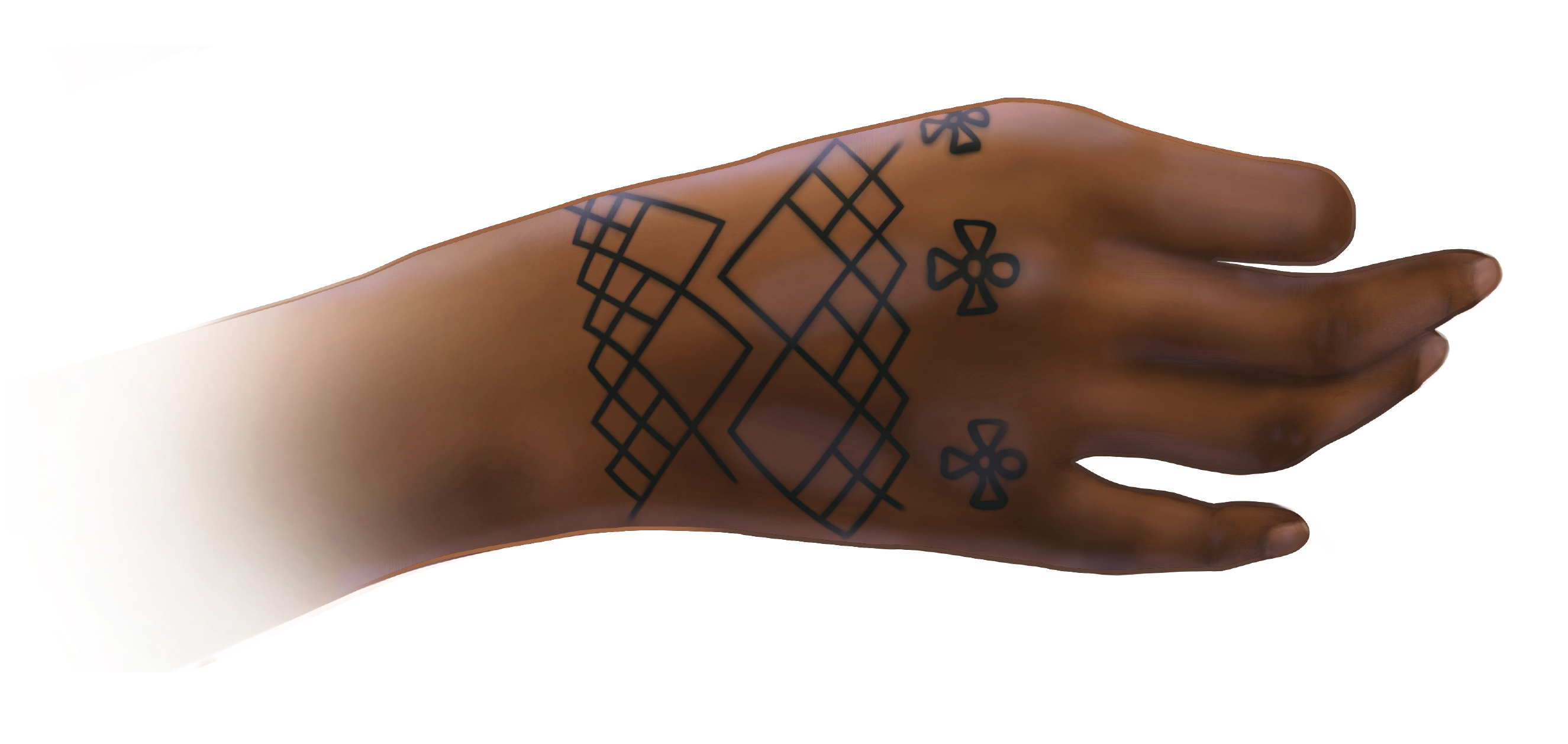
However, from the seventh century onwards, tattoos appear to have become much more prevalent and were applied to the bodies of men, women, and children. At the medieval cemetery of Kulubnarti in Sudan, for instance, around one in five mummies was found to be decorated with tattoos.
Unlike earlier markings, these were often placed in highly visible locations like the forehead, temples, and cheeks, and they may have served as a means of labeling Christians. This practice continued throughout the Middle Ages and was later observed by Marco Polo. Modern-day Christians in Egypt, Sudan, and Ethiopia continue to tattoo crosses on their foreheads to mark their religious identity.
Strikingly, evidence of facial tattoos at Kulubnarti were found on a baby of less than 1 year old, as well as an 18-month-old toddler, although the exact purpose of these marks is unclear. For instance, in addition to marking these infants out as Christians, the designs may also have been placed on the youngsters' foreheads in an attempt to treat serious medical conditions such as malaria.
According to the study authors, frequent headaches are a common symptom of malaria, which has been present in the Nile Valley for thousands of years and is particularly deadly to children under the age of five.
It is therefore possible that these tattooed infants were inked up for medicinal reasons when they showed signs of experiencing headaches, although at this stage it’s unclear if they actually had malaria − or, indeed, if they succumbed to the illness.
The study is published in the Proceedings of the National Academy of Sciences.