Nature
 PUBLISHED


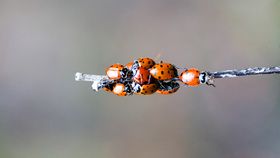


Introducing predators to tackle pests is nothing new in the world of agriculture. But Danish researchers have come up with a very 21st-century approach to this established farming technique: the ladybug-dumping “eco-drone.”
Danish news reports that researchers from the University of Southern Denmark and the company Ecobotix are developing a drone that is able to quickly and evenly distribute ladybirds, predatory mites, and parasitic wasps across fields of crops from the sky. As natural predators, these insects are able to effectively reduce populations of aphids and mites that damage the farmers' crops.
“The challenge is to develop a spreader that can spread the insects without destroying them. They need to eat the pests before they themselves end up as bird food. To be sure of an even spreading, I need to gauge the airflow under the drone,” Associate Professor Søren Wiatr Borg from the Institute of Technology and Innovation said in a statement.
By making this organic solution more efficient and cost-effective, they hope to reduce farmers’ reliance on pesticides. The project received an 8.4 million kroner ($1.3 million) bump of cash from the Danish government, who are eager to take advantage of the increasing global demand for organic goods.
The first test sites are strawberry fields, fruit orchards, and Christmas tree farms since they produce a large yield in a small area. But once fully developed, the team have high hopes the technology can be applied to large-scale corn farms.
"Previously, it has been difficult and far too expensive to use nature's own pest control methods on large areas, but by using the drones it is now possible," Professor Borg added.
[H/T: BBC]