Humans
 PUBLISHED
 1
1




High up in the Pyrenees Mountains, a cave holds the oldest evidence of intense human occupation in the region. But prehistoric people weren't just sheltering here 7,000 years ago; they were working, hunting for and processing a mysterious green mineral.
The discovery was made in Cova 338, a cavern located around 2,235 meters (7,332 feet) above sea level in the Núria Valley in the Catalan Pyrenees Mountains of Spain. In a recent dig, archaeologists from the Autonomous University of Barcelona (UAB) and IPHES-CERCA uncovered how the cave was a hive of human activity for 4,000 years from the 5th millennium BCE to the end of the 1st millennium BCE.
It was long assumed that high-altitude environments above 2,000 meters (6,561 feet), where the air is thin and conditions can be brutal, were only occasionally inhabited, perhaps sought out only in desperate circumstances. However, Cova 338 suggests this wasn't always the case.
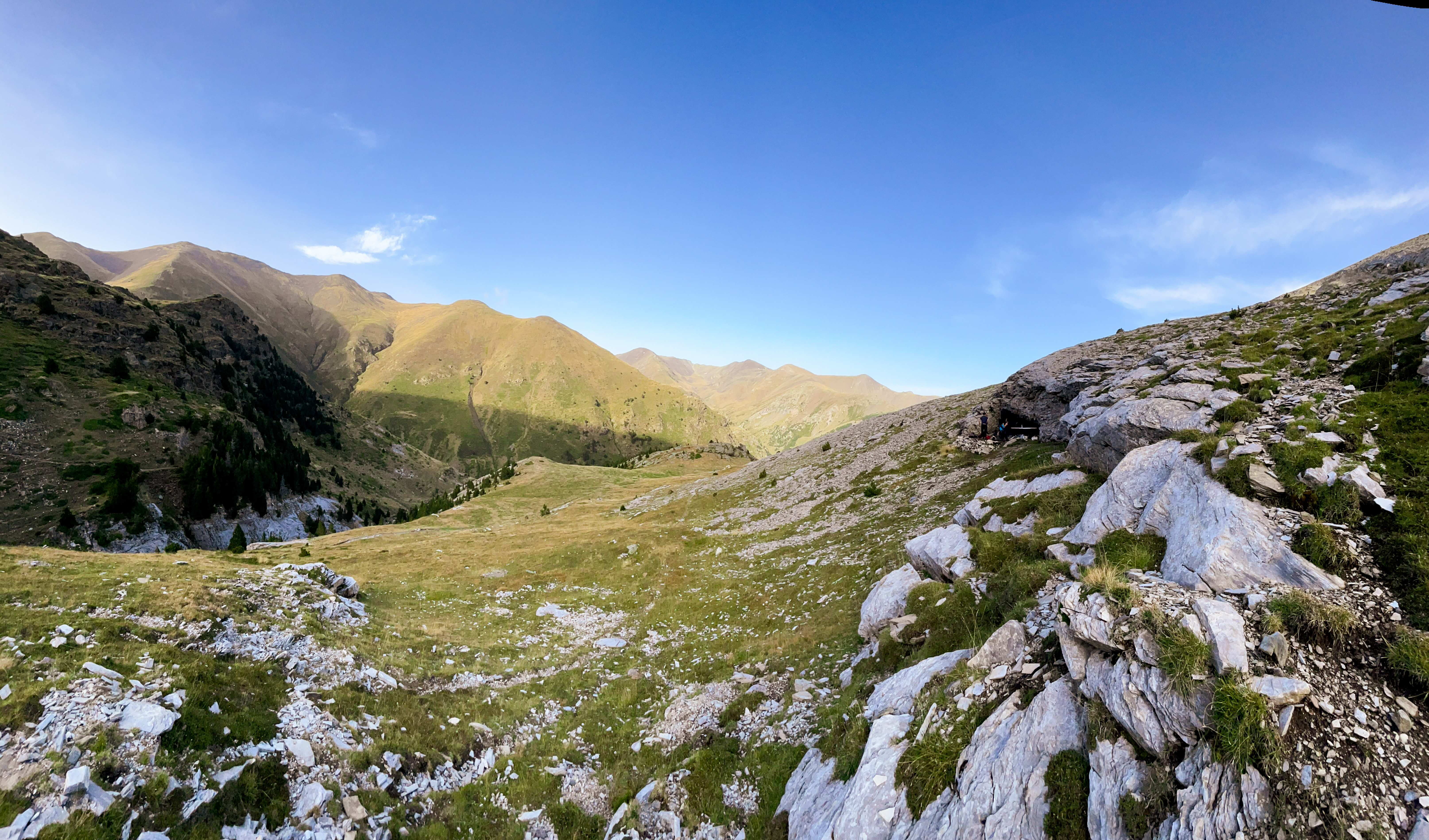
“Cova 338 forces us to rethink the role of high mountain environments in Pyrenean prehistoric societies,” Carlos Tornero, professor in the Department of Prehistory at the UAB and researcher at IPHES-CERCA, said in a statement. “For a long time, these spaces were assumed to be marginal. What we document here is recurrent occupation, with complex activities and a clear exploitation of mineral resources.”
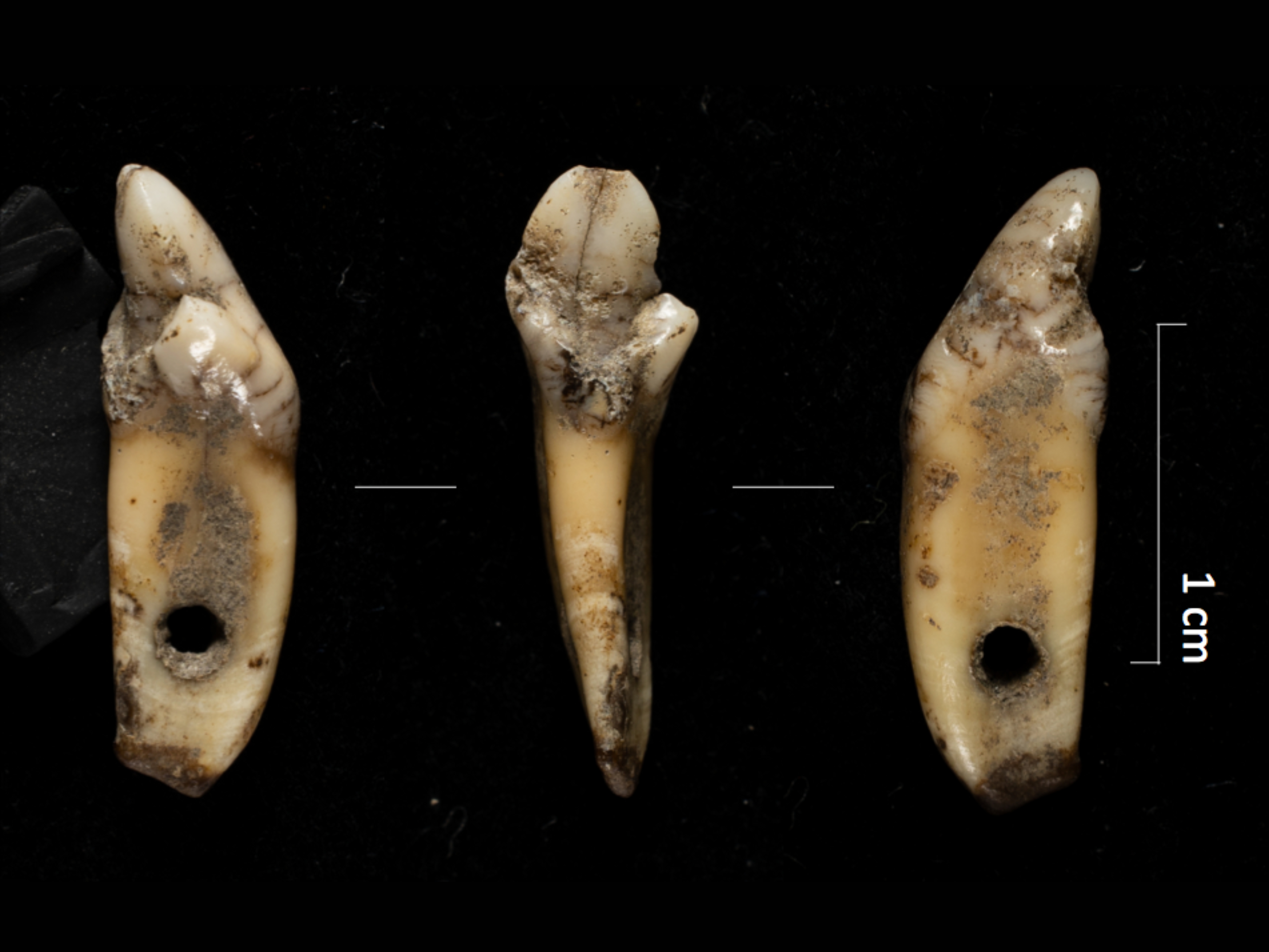
Inside the cave, the team unearthed plant remains, ceramic fragments, and charcoal, which suggests humans lit fires here many millennia ago. They also recovered two beautiful pendants: one fashioned from a sea shell (Glycymeris) and another from the tooth of a brown bear.
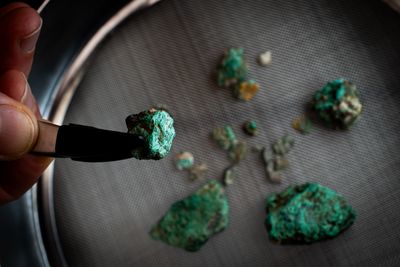
Striking as those objects are, the most intriguing find was what Tornero described as a “remarkable assemblage of green minerals, likely malachite, a copper-rich mineral”.
Nearly 200 rocky fragments containing patches of the green mineral were recovered from the cave floor. They were found alongside nearly 23 fireplaces, many of which contained burned specks of the green substance.
That little detail matters enormously. Malachite is known to be the ore that kick-started the Copper Age, and heating it with flames is how ancient metallurgists coaxed the metal from rock. It seems very likely that people weren't merely sheltering or foraging up here in the cave, they were mining and smelting copper.
“Many of these fragments are thermally altered, while other materials in the cave are not, which clearly suggests that fire played an important role in their processing and that there was a deliberate intention behind it. In other words, they weren’t burned by accident,” co-author Dr Julia Montes-Landa, from the University of Granada, said in another statement.
If that interpretation holds, Cova 338 would rank among the earliest known sites of copper mining and processing in Western Europe.
“For the first time in the Pyrenees, high-mountain prehistoric occupations of significant intensity have been documented, characterized by repeated activities and the direct exploitation of mineral resources within the cave,” added Tornero.
“This site demonstrates that the Pyrenees were not a marginal territory for prehistoric communities, but a space fully integrated into their mobility strategies and territorial exploitation."
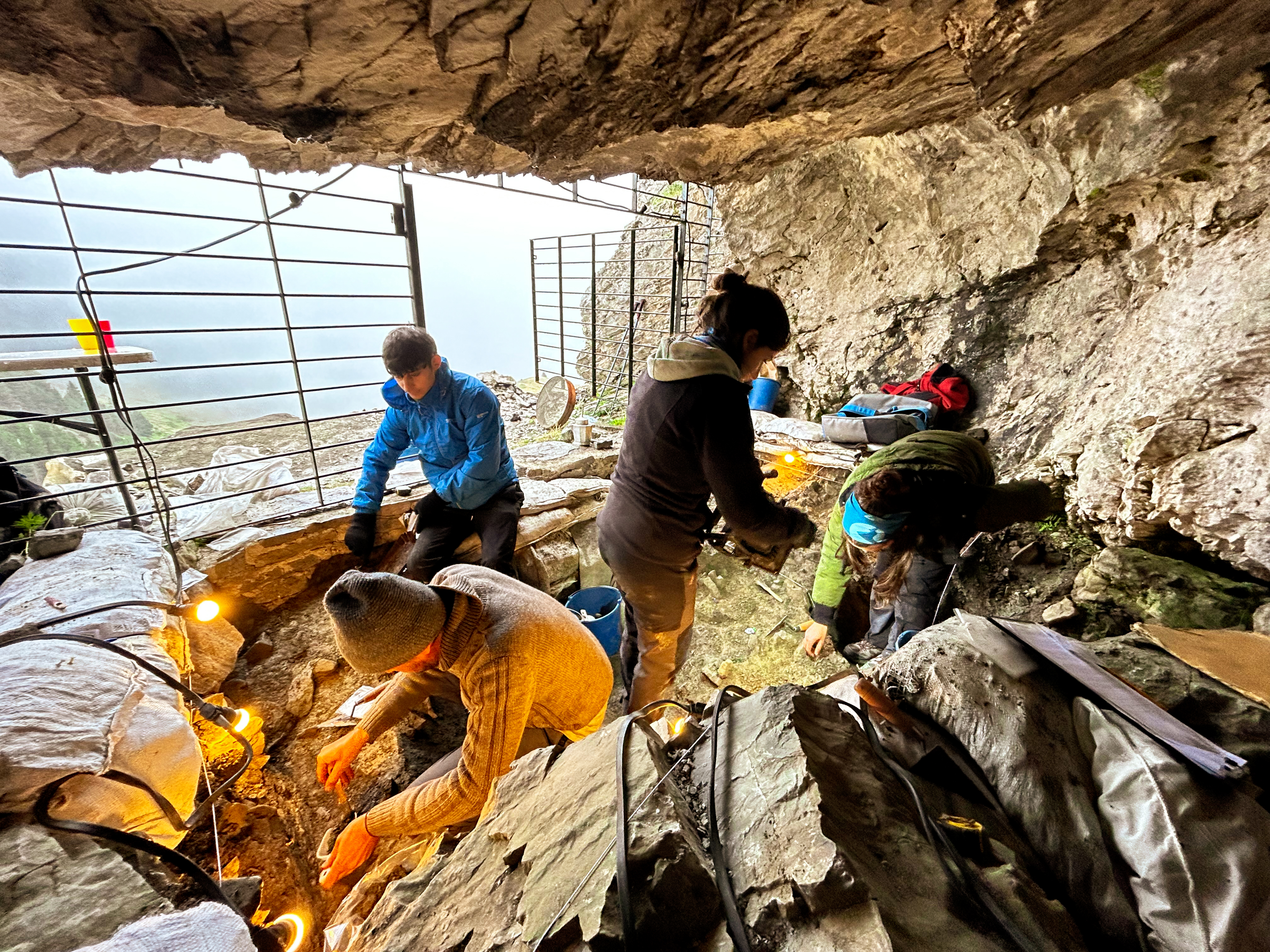
Reaching this site is no easy feat, even in the 21st century. It’s only accessed on foot from the Núria Valley, without any motorized vehicles. Everything the researchers collected had to be carried back down the mountain by hand, which makes the scale of ancient activity documented here all the more remarkable.
“The mountain was not a barrier, but an active place within the economic and territorial organization of prehistoric communities,” added co-author Eudald Carbonell.
The study is published in the journal Frontiers in Environmental Archaeology.