Space and Physics
 PUBLISHED




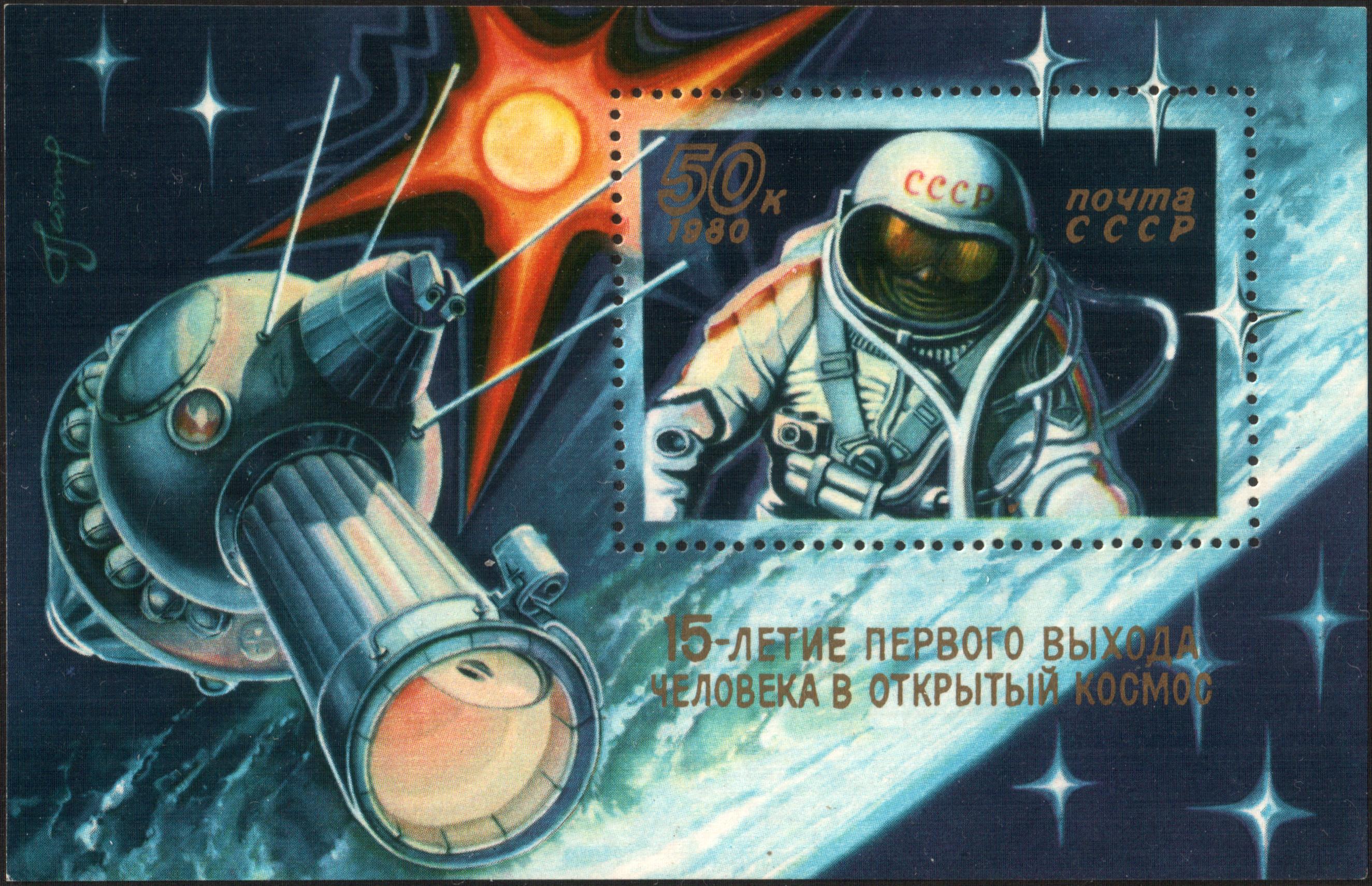
It was 1965, and Alexei Leonov had just been through a terror no human before had ever experienced: the first-ever spacewalk. Stranded outside of his spacecraft, with only a few layers of fabric and a backpack full of oxygen to keep him alive, he had been forced to open his suit to the vacuum of space – risking his life in the process – just to get back inside.
Incredibly, it worked: he might have been overheating, upside down, and suffering from the first pangs of the bends, but Leonov made it back inside his craft. It was time to go back home.
Unfortunately, his problems were just beginning.
This is part 2 of a dual article on the first ever spacewalk. Part 1 can be found here.
Kicking off
The airlock – a 3-meter-long tube barely large enough to maneuver inside – that had caused so much trouble as Leonov returned from his spacewalk, was now redundant, and could be jettisoned. So Leonov and his co-cosmonaut Pavel Belyayev triggered a collection of small explosive charges, designed to kick it off the craft and into space – and immediately they were sent spinning.
In accordance with Isaac Newton’s third law of motion, the explosion had created an equal force in the opposite direction. The spacecraft started spinning uncontrollably, disorienting the cosmonauts inside.
But this calamity was merely a harbinger of what was to come. First, they noticed the oxygen levels on board climbing rapidly, turning the hot, humid spacecraft into a tinderbox, ready to blow. “Fortunately the engines produced no sparks,” Leonov told the BBC in 2014. “A spark would have caused an explosion and we would have been vaporized.”
The pair frantically tried to curb the rising oxygen pressure, eventually succeeding only to find a new issue: the spacecraft’s automatic guidance system was broken. Leonov noticed the problem “just five minutes before our retro-engine was due to start dropping us out of orbit,” he later wrote in the 2006 book Two Sides of the Moon.
_01.jpg "Leonov next to one of his paintings in 1968.")
The pair’s carefully made plans were immediately thrown into limbo once again. “We would have to switch off the automatic landing program,” Leonov wrote. “This meant we would have to orient the spacecraft before reentry manually.”
It was something no cosmonaut had ever done before, and for good reason. Guiding a spacecraft back to Earth is a highly precise operation: get your angle too low, and the craft will just bounce off the planet’s atmosphere; too steep, and you plummet down at lethal speeds, destroying the vehicle and anybody on board.
The time and place of their eventual landing were now, at best, largely out of their control; even the physical process of it was arduous. “In order to use the optical device necessary for orientation, [Pasha] had to lean horizontally across both seats in the spacecraft,” Leonov recalled, “while I held him steady in front of the orientation porthole.”
“We then had to maneuver ourselves back into the correct positions in our seats very rapidly,” he explained, “so that the spacecraft’s center of gravity was correct during the reentry burn.”
They were low on fuel – so low that more than one correction to their trajectory would be impossible. They had one chance. Then, the cosmonauts heard a voice from ground control: “Where did you land?” it asked.
It couldn’t be clearer that they were on their own.
Crashing down
Secured into their seats, the cosmonauts prepared for reentry. Belyayev switched on the engines for retro-fire; with a sharp thrust, they forced the spacecraft to slow down, bringing it into a lower orbit and, eventually, into Earth’s atmosphere.
But once again, something was wrong. “It felt as if we were being dragged from behind, as if something was pulling us back,” Leonov recalled. “When we began to reenter the Earth’s atmosphere, we started to feel gravity pulling us in the opposite direction.”
This wasn’t just turbulence – the instruments on board showed 10 Gs of force fighting their reentry. That’s enough to be fatal, even for highly trained pilots like Leonov and Belyayev, and the pair felt blood vessels in their eyes bursting from the pressure.
“Looking out my window, I realized with horror what was happening,” Leonov wrote. The orbital module of the spacecraft should have detached, leaving the cosmonauts only having to navigate the landing module to the ground. But the two modules were connected by a cable, and that had kept them connected: “as we rapidly entered the denser Earth atmosphere, the cable had become the two modules’ common center of gravity, and we were spinning around it,” Leonov explained.
They continued their manic descent, spinning like a superheated sycamore seed, until they were just 100 kilometers from the ground. Everything was calm. Then, everything was black. Then, everything stopped.
Alone in the dark
After nearly dying in open space, nearly dying inside the spacecraft, and nearly dying from G-force related hypoxia, you would hope that Leonov and Belyayev had been through the worst of it. But each of those missteps had added up, and even the cosmonauts’ hastily reworked landing plan was now scuppered.
Rather than Perm, a city just west of the Ural Mountains that Leonov had chosen both for its location and its sparse population, the spacecraft had landed in the forests of Siberia. “Our orientation system indicated that we had landed 2,000 kilometers beyond Perm,” Leonov wrote.
“‘How soon do you think they’ll pick us up?’ Pasha asked me, concerned, as the landing module shuddered to a standstill,” he recalled. “I tried to make light of our situation. ‘In three months, maybe, they’ll find us with dog sleighs.’”
Finally on solid ground, the cosmonauts tried to exit the spacecraft. And we know this next detail is going to stretch your belief, but we swear it’s true: the door was stuck. They had landed so close to a birch tree that the exit hatch was jammed against it, trapping the pair inside.
“We had no alternative but to start rocking the hatch violently back and forth, trying to shift it clear of the tree,” Leonov wrote. “Then, using all his strength, Pasha managed to push the hatch away from the remains of the bolts, and it slid back and disappeared into the snow.”
“After so many emergencies, the relief at drawing breath on Earth again was indescribable,” he added.
Stranded in the taiga, the pair set up their radio channel and began broadcasting their signal. All they could do now was wait for rescue – and in the meantime, there was just one final hurdle to overcome: the frigid, -25°C Siberian weather, their clothes soaked through with sweat… and the countless mating-season aggressive wolves and bears that populated their surroundings.
Surviving on Earth
Moscow, it would later turn out, never received Leonov and Belyayev’s signal. Luckily – perhaps the only bit of luck the pair had on this trip – somebody else did.
“Late in the afternoon, we picked up the sound of a helicopter approaching,” Leonov wrote. “We plowed through the thick snow into a clearing and stood waving our arms.”
Their signal had been picked up by a nearby cargo plane that had alerted a rescue chopper – but it was a civilian aircraft, not a military one, and unable to save the pair. “They tossed a rope ladder down to us and signaled that we should grab it and clamber aboard,” Leonov recalled. “It was impossible. It was a flimsy ladder and our spacesuits were too heavy and stiff to allow us to scale its rungs.”
Still stuck, then – but word was spreading of their location. Aircraft after aircraft started circling the skies above them, with pilots tossing out well-meant, if not always entirely helpful, items: a pair of thick winter boots from one; an axe from another; clothes that ultimately got stuck in the high branches of the trees; a bottle of cognac – “it broke when it landed,” Leonov wrote.
But the sun was setting, and the pair knew they weren’t getting rescued. As the temperatures plummeted, they set about figuring out how to survive the night.
Inside their spacesuits, they were wet – so much sweat had poured out of Leonov throughout the ordeal that it sloshed around up to his knees inside his boots – and that meant frostbite. Just as it had been in space, their best course of action was also the scariest: they would have to strip naked in the snow, let their suits dry, and, ideally, figure out if they could shed any parts of their bulky, inflexible outer layer without sacrificing warmth.
They tried, too, to free the capsule’s parachute from the trees where it was tangled – more insulation for their overnight camp. But it was no good: “There was nothing to do but return to the capsule and try to keep as warm as we could,” Leonov wrote. “We had nothing to cover the gaping hole left by the detached exit hatch, and we could feel our body heat dropping sharply as the temperature plummeted.”
A hero’s return
It must have come as some relief when the pair woke up the next morning – and doubly so when they realized why. A plane was loudly circling overhead, almost drowning out the sound of voices in the distance; “I took a signal gun and fired a flare,” Leonov recalled. “Slowly, a small group of men on skis came into view.”
Their rescue had finally come – kind of. The group was, at long last, one sent from Moscow, and they had at least brought food, water, and enough supplies to build a wood fire and cabin for the cosmonauts to shelter in for the night. But the forest was just too thick for a helicopter to land without a concerted effort to clear it.
It would take another day before the pair were able to go home. First, they had to ski the 9 kilometers to a rescue chopper; then they were flown back to the launch site, where a jubilant ground control crew was waiting.
Their ordeal was finally over. After experiencing just about every piece of bad luck it’s possible to imagine – coming within millimeters of death over and over again – all that was left to do was to submit their official reports of the mission.
“Mine was brief and to the point,” Leonov wrote. “Provided with a special suit, man can survive and work in open space. Thank you for your attention.”