Space and Physics
 PUBLISHED




This article first appeared in Issue 7 of our free digital magazine CURIOUS.
In issue 5 of CURIOUS we mentioned HALO Space, an ambitious company with big plans to send people into space in a balloon. Well, more of a capsule suspended by a balloon. The curious contraption gives passengers a 360-degree view of Earth as they drift down from the stratosphere, or at least it will if all goes well in the lead-up to HALO Space’s estimated commercial launch of 2025.
Since they first came on our radar, HALO Space has been busy conducting their first test flight to send one of their balloons, complete with a full-size uncrewed capsule, 40 kilometers (25 miles) into the air, which in December 2022 they successfully did. To learn more about the highs and lows of going to space in a balloon, we caught up with the folks over at HALO Space to hear how the first test flight went and find out how soon we can expect to see humans floating through the stratosphere.
Forget flying kites, Poppins. We’re going space ballooning.
What is the HALO Space balloon?
Carlos Mira, CEO: The balloon is made of a polycarbonate fabric and has a maximum dimension of between 110 and 120 metres [360 and 394 feet], the length of a football field, at full extension. The balloon reaches that size at an altitude of 35 kilometres [22 miles], when the gas filling it is fully expanded. The gasses used to inflate it will be helium or hydrogen. The balloon connects to the capsule with a flight train.
How did the test flight go?
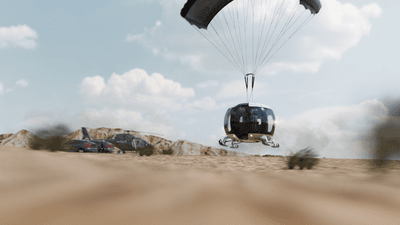
CM: Our first test flight went exactly as planned, delivering successful results for all systems and components being tested. The balloon, carrying a full-size prototype of our capsule, flew to an altitude of 37 kilometres [23 miles] into the stratosphere and landed safely and successfully after a flight that lasted four hours. The most important thing is that the flight demonstrated the behaviour of the HALO capsule at launch, ascent, cruise, descent, and landing, as well as safety systems, ground and onboard equipment, which are the most critical parts of HALO’s flight program.
Is the balloon piloted or self-driven?
CM: During the test phase, such as the recent test flight in India, the capsule is uncrewed. However, following completion of all required tests, the balloon and capsule will be piloted by a pilot who will be able to direct the flight and determine the landing location to be used, updating the route with real time data during the flight.
Subscribe to our newsletter and get every issue of CURIOUS delivered to your inbox free each month.
How many people will it eventually carry, and for how long?
CM: The capsule will be able to take eight passengers alongside a pilot. The commercial flight will fly between 25-40 kilometres [16-25 miles] high allowing passengers to observe the curvature of planet Earth and the vastness of space in a flight lasting up to six hours.
Is the balloon really going to space?
CM: The balloon will take passengers to “near space” [somewhere between the Armstrong limit at 19 kilometres (12 miles) and the Kármán line], to a maximum altitude of 40 kilometres.
What do you hope to achieve during the next test flight?
CM: The second test flight is scheduled for the first half of 2023 in southern Spain, where HALO Space will test the steerable parachute navigation system as well as advancements to its current systems based on what has been learned from its first flight.
What sights can future visitors expect to see while riding with HALO Space?
CM: We want to give customers a life-changing experience, The Overview Effect – a view of the curvature of the Earth that can only be experienced starting at an altitude of 30+ kilometres [19+ miles]. Astronauts have described it as a state of awe with self-transcendent qualities, precipitated by a particularly striking visual stimulus, from space.

What obstacles does HALO Space have to overcome before tickets go on sale?
CM: Safety is of course our highest priority, and we will be continuing our extensive testing program in the coming years, including achieving FAA certification. We plan to begin operating commercial flights in 2025 and aim to reach up to 400 commercial trips with 3,000 passengers carried per year by 2029.
Does the idea of drifting to the mid-stratosphere in a balloon float your boat? With just two years until HALO Space’s estimated launch date, you’d best get thinking.
CURIOUS magazine is a digital magazine from IFLScience featuring interviews, experts, deep dives, fun facts, news, book excerpts, and much more. Issue 10 is out now.

 1
1