Humans
 PUBLISHED
 1
1


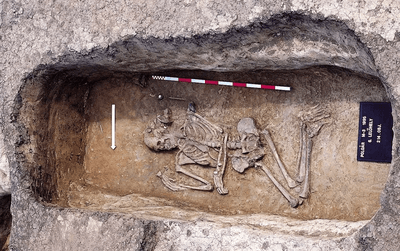


Two burial sites from Hungary provide contrasting pictures of gender divisions as the Stone Age entered its final stage. Neither of them, however, fit well with the common story of rigid gender roles as humanity’s norm.
There is an archetype often shared online that insists in the days of our ancestors, men were “real” men and women were “real” women. What that means is a whole other debate, but this view of gender roles as rigid and inflexible makes it easy to attack anyone who doesn't fit into them, or to blame modern society’s failings for not reinforcing them. This, however, doesn't acknowledge that historic and archaeological evidence going back thousands of years reveals a more complex picture, with some societies far more flexible in their adherence to gender divisions than others.
To extend our picture further back in time Dr Sébastien Villotte of the French National Center for Scientific Research (CNRS) and colleagues studied the skeletons of 125 adults buried centuries apart from two sites in what is now Hungary: Polgár-Ferenci-hát and Polgár-Csőszhalom. Archaeologists have studied ancient gender roles through evidence of differing physical activity and the grave goods the bodies were buried with. Dental wear can also reveal differences or similarities in diet. However, Villotte and co-authors claim the methods have not been combined to create an integrated picture.
“We used a combination of methods to determine the sex of the individuals,” Villotte told IFLScience. “The main method we used is based on the morphology and morphometrics of the pelvis, which is widely recognized as one of the most reliable ways to determine sex from skeletal remains. Studies show that these methods have a high accuracy rate, often around 98 percent or higher. For cases where the pelvis methods did not provide a clear answer, we used additional methods such as ancient DNA analysis.”
Nevertheless, Villotte added, “There are indeed six individuals included in the study for which we could not determine sex with great reliability and so decided to leave it as undetermined.”
Polgár-Ferenci-hát was in use about 7,300-7,100 years ago, and there’s little evidence for gender differences. Few grave goods were buried with the 94 adult bodies at this site, and those that were show no clear pattern by sex.
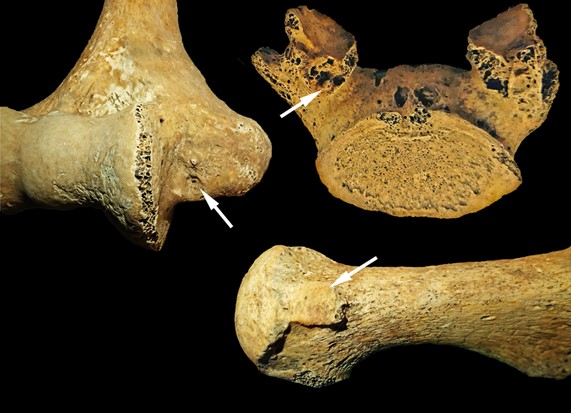
The researchers also looked for spondylolysis, spinal damage fractures, usually associated with heavy or repetitive lifting, upper limb development indicative of overuse, and toe hyperextension associated with extensive kneeling. They found only one questionable case of spondylolysis, but half the women, and only 19 percent of the men, appeared to have spent enough time kneeling for it to affect their bones.
By 6,800-6,600 years ago, Polgár society had changed markedly, the burials suggest. Many female bodies were buried with belts made of Spondylus beads, while men had stone tools, presumably for use in the afterlife.
On the other hand (literally), most male bodies were placed on their right side, while most females were buried on their left. This is a pattern seen on the Great Hungarian Plain in the Neolithic, but seven individuals at Polgár-Csőszhalom were lying the “wrong” way for their sex.
That might be written off as carelessness by Neolithic funeral directors or that the association between side and gender was not considered so important. However, notably, one of the female bodies at Csőszhalom had a polished stone tool with her, rather than a shell belt.
Spondylolysis was equally common among males and females (along with one individual of indeterminate sex). Many of the male bodies also had upper body lesions often seen in modern athletes who throw, like pitchers. Extensive kneeling was now more common in men than women, but the difference was not statistically significant. However, being buried with stone tools was significantly associated with hyperextended toes, partly because the woman buried with tools also had this sign.
Putting all this together, the authors think that during the interval between the sites’ use, certain activities became primarily male or female, and some people did them often enough that it marked their bones
Nevertheless, it appears that at the time the bodies were buried at Csőszhalom, sex did not create an unbreakable cage in terms of the life one led. “Females may have assumed roles traditionally associated with males (and possibly vice versa), and some individuals were treated in death with funerary markers characteristic of both sexes,” the authors write. “Rather than indicating a rigid binary division of behavior, the evidence suggests that gender roles at CS were fluid and shaped by multiple intersecting factors.”
Notably, it seems, when women did take on roles in society more commonly associated with men, this was recognized, and possibly honored, in death.
The study is open access in The American Journal of Biological Anthropology.