Nature
 PUBLISHED
 46
46


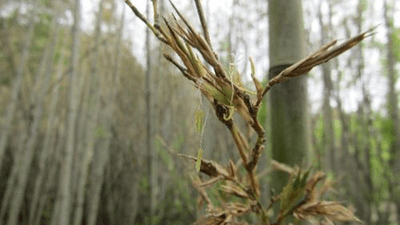


There is a type of bamboo known as henon, Phyllostachys nigra var. henonis, which only flowers once every 120 years. Though this may seem like a long time to put off flowering, the bamboo dies shortly afterward, so let's not be so quick to judge.
With a gap of over a century between flowering, botanists don't get much chance to study how they regenerate. The last major flowering event took place in 1908, though some flowering occurred between 1903 and 1912, placing the next major event around 2028.
However, in 2020, researchers from Hiroshima University found a plant flowering nice and early to beat the crowds, using the opportunity to study how it regenerates. Unfortunately, the team found that the next flowering event could be a disaster for bamboo production and the environment.
“The bamboo did not produce any viable seeds that can germinate," first author Toshihiro Yamada said in a statement. "Bamboo shoot production was stopped after flowering. There was no sign of regeneration of this bamboo after flowering for the initial three years."
The team's observations also found no asexual reproduction by the plant.
"All culms died in the study site, with no sign of regeneration by seed, culm, or dwarf ramet production apparent," the team added in their paper. "These results suggest a dark future for P. nigra var. henonis in Japan: the species may be hard to regenerate after flowering."
The authors expect regeneration of the bamboo to be slow, lasting several years where the bamboo cannot be harvested, having a sizeable economic impact.
"Another concern regarding this dieback are the environmental impacts," they add, "which may lead to drastic changes in vegetation and land cover."
The study is published in the journal PLOS ONE.