Space and Physics
 PUBLISHED



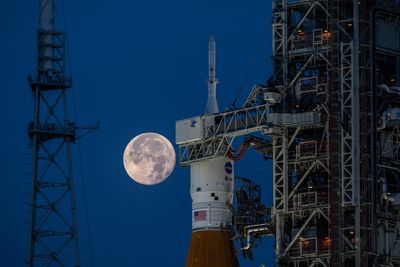


After Monday’s scrubbed launch, NASA is ready to try again. Artemis I will now leave Earth in a new launch window which will open on Saturday, September 3 at 2:17 p.m. EDT. The window will be open for two hours. Everything going well, this will be the first flight of NASA’s Orion spacecraft and the agency’s brand-new Space Launch System (SLS), the most powerful rocket in the world.
Monday’s attempt had to be halted as one of the engines on the core stage, engine 3, couldn’t get to the right temperature of -250 °C ( about -420 °F). The countdown was stopped 40 minutes before launch while engineers attempted to sort the problem. There was also an issue earlier with the fueling, but the team had found a workaround. The engine cooling didn’t have an easy fix, and with a storm incoming, NASA decided to postpone.
The choice was certainly disappointing, but online the disappointment was turned into memes. The team is working to make sure that the issues will not repeat. The weather for Saturday is expected to be good – showers are possible, but nothing of concern.
SLS will deliver the uncrewed Orion capsule to space, where it will make a flyby of the Moon and return to Earth after its 42-day mission, including six days in lunar orbit. This new technology needs to demonstrate it is foolproof as it will one day take humans to the Moon. This means Orion's heat shield will need to stand up to reenter through Earth's atmosphere.