Health and Medicine
 PUBLISHED



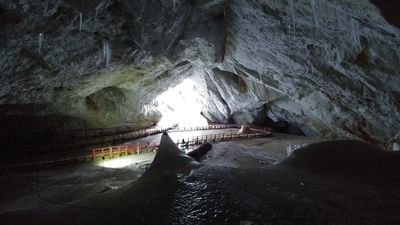


Bacteria found in a 5,000-year-old ice layer have shown how climate change could potentially drive the rise of more antibiotic resistance, as well as how ancient bacteria could provide opportunities for biotechnology.
The bacterium in question, named Psychrobacter SC65A.3, was isolated from a 25-meter (82-foot) ice core extracted from Scărișoara Ice Cave in Romania. Researchers sequenced its genome and tested it against 28 antibiotics, finding it was resistant to 10 of them across eight classes.
This is the first time the resistance profile of an ancient bacterium has been characterized from an ice cave, and it highlights how antimicrobial resistance is an ancient adaptation that can be fostered in extreme environments.
“The 10 antibiotics we found resistance to are widely used in oral and injectable therapies used to treat a range of serious bacterial infections,” said Dr Cristina Purcarea, of the Institute of Biology Bucharest of the Romanian Academy, in a statement. “Studying microbes such as Psychrobacter SC65A.3 […] reveals how antibiotic resistance evolved naturally in the environment, long before modern antibiotics were ever used.”
That might seem odd: How could an ancient bacterial strain have learned to fend off antibiotics we use today, when they didn’t exist thousands of years ago? But the truth is that microbes have used these chemicals to wage war among themselves for millions, if not billions, of years.
In fact, most of our antimicrobial arsenal comes from the molecules microbes use to fend off other microbes. Penicillin, for example, was discovered because it is produced naturally by members of the Penicillium genus of fungi, which fortuitously infected Alexander Fleming’s Petri dish of Staphylococcus aureus bacteria in 1928.
This gets to the heart of a misunderstanding a lot of people have about how bacteria and other microbes develop resistance to drugs. It isn’t that new genes spring up in response to treatment; those genes already exist in the microbial ecosystem, and the drugs create an environment where resistant microbes reproduce more readily than their undefended cousins.
This means that when antimicrobial drugs are used widely, antimicrobial resistance genes that were essentially sitting dormant, like a reservoir, become more prevalent within a species. They might even be passed between species, in a process called horizontal gene transfer.
Researchers have known this for a long time, but most of the microbes they study come from mild environments, while extremophiles – organisms that live in less hospitable places like ice caves – have been relatively under-investigated. SC65A, for instance, is a polyextremophile that grows best in cold environments with a lot of salt.
It is now becoming clear that these kinds of organisms, which are pushed to the edge of survival by the harsh environments they live in, have a special propensity to develop genes with novel antimicrobial abilities, since the same adaptations can coincidentally help in both circumstances.
“Microbes from extreme environments like ice caves often carry antimicrobial resistance because they evolved over millennia or even millions of years to survive stress conditions and compete with other microbes,” Purcarea told IFLScience. “Their biomolecules responsible for natural [resistance] can also provide protection against modern antibiotics, making these microbes a valuable reservoir of resistance genes.”
Discovering microbes with specific defense mechanisms in extreme environments is more of a scientific opportunity to advance medicine than an environmental threat.
Dr Cristina Purcarea
One example of this is genes encoding proteins that help pump out toxins and other molecules that would otherwise build up inside a bacterium. These same pumps can be co-opted to bail out antimicrobial drugs, generating resistance.
“As glaciers melt, ancient microbes may be released back into the environment,” Purcarea told IFLScience. “For resistance to become a public health problem [, however], genes must transfer to pathogenic bacteria and be maintained under modern selective pressures (like antibiotic use). Therefore, discovering microbes with specific defense mechanisms in extreme environments is more of a scientific opportunity to advance medicine than an environmental threat.”
In the SC65A genome, the researchers found almost 600 genes with unknown functions, suggesting an as-yet-untapped source for discovering novel biological mechanisms. Analysis of the genome also revealed 11 genes that are potentially able to kill or stop the growth of other bacteria, fungi, and viruses.
The study is published in Frontiers in Microbiology.