Space and Physics
 PUBLISHED
 1
1


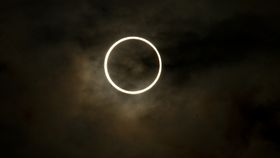


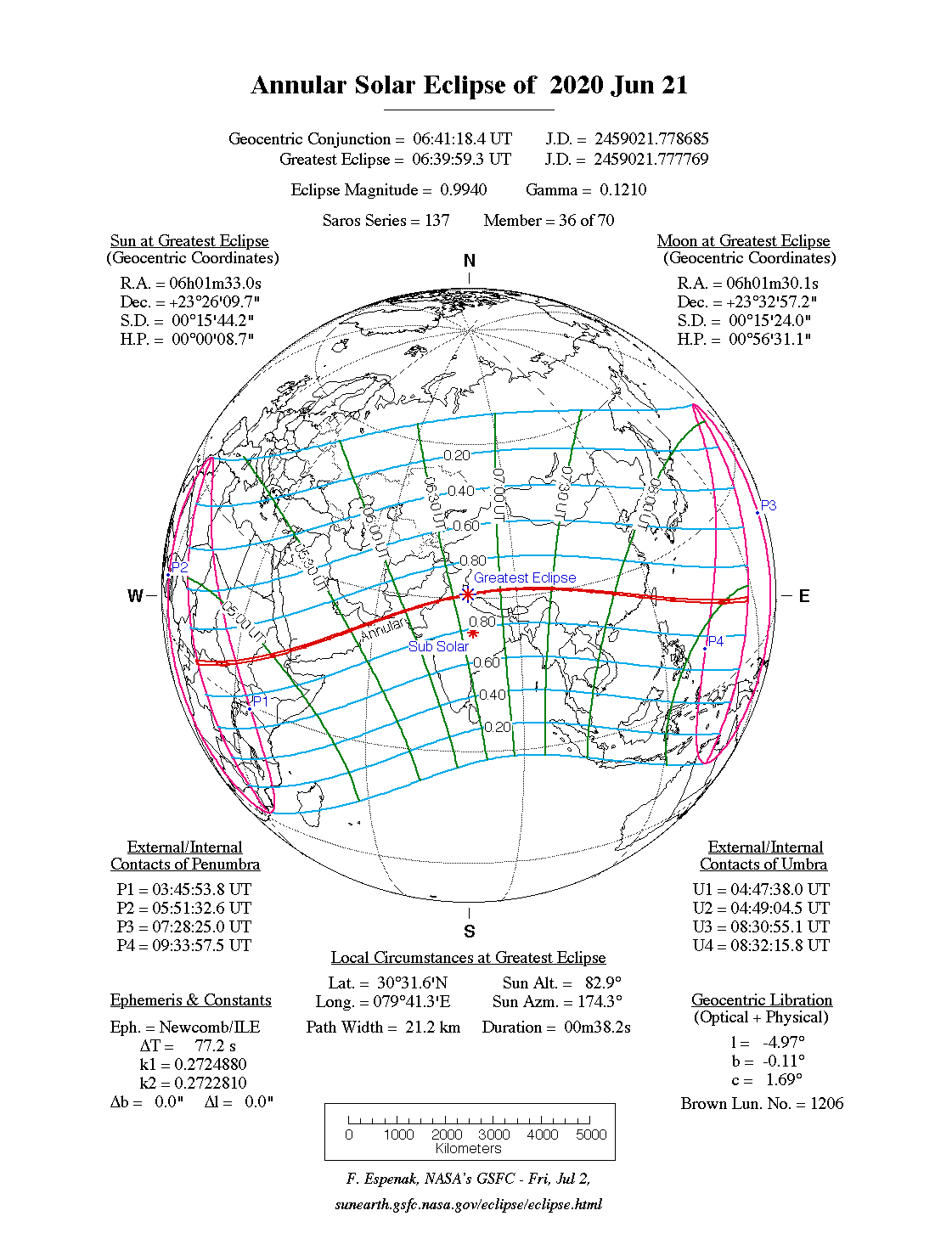
Fans of eclipses rejoice: 2020 has several lunar eclipses and two solar eclipses coming up. The first one will be an annular solar eclipse on June 21, the day after the Summer Solstice in the Northern Hemisphere. The path of totality will go from Central Africa, through the Arabian Peninsula, India, China, Taiwan, and finally the Pacific. A partial eclipse will be visible across most of Africa, Asia, Southern and Eastern Europe, and Northern Australia.
The eclipse will begin at dawn in Eastern Africa (June 21, 03:45 GMT) with totality beginning about one hour later. The totality will last for about four hours as the shadow of the Moon moves across the surface of the Earth. The last location to see totality will be in the Pacific Ocean at 08:32:17 GMT.
An annular eclipse is nicknamed "Ring of Fire" because the lunar disk doesn’t completely cover the Sun, leaving a bright circle around the Moon. This happens when the Moon is near its apogee, its furthest point from the Earth, making its appearance in the sky slightly smaller than usual and allowing for portions of the Sun to be visible.

For this reason, even at totality, it is vitally important people use eclipse glasses to safely watch the event as it can burn your retinas with its light even if you take a quick glance. If you are interested in watching, we recommend the use of filters for cameras, binoculars, and telescopes, as well as eclipse glasses. You can make your own pinhole camera if needed.
The next annular eclipse is just one year away. On June 10, 2021, people across Ontario, Quebec, Greenland, the North Pole, and Chukotka in Northeastern Russia will be able to see the annular eclipse. The next total solar eclipse will be on December 15, 2020, and will be visible across South America.