Humans
 PUBLISHED
 1
1


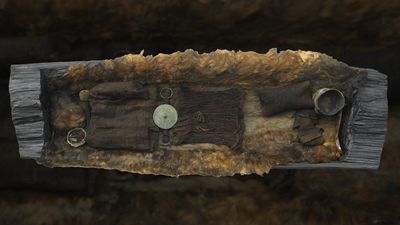


On February 24, 1921, a farmer aiming to remove a burial mound on his land near the town of Egtved in Jutland, Denmark, made an incredible discovery: an entire oak tree trunk that had been fashioned into a coffin.
A quick look inside revealed that the coffin had remained untouched since it was laid in the ground, and so a team took it back to the National Museum of Denmark. When the coffin was finally examined, it revealed an astonishingly well-preserved burial.
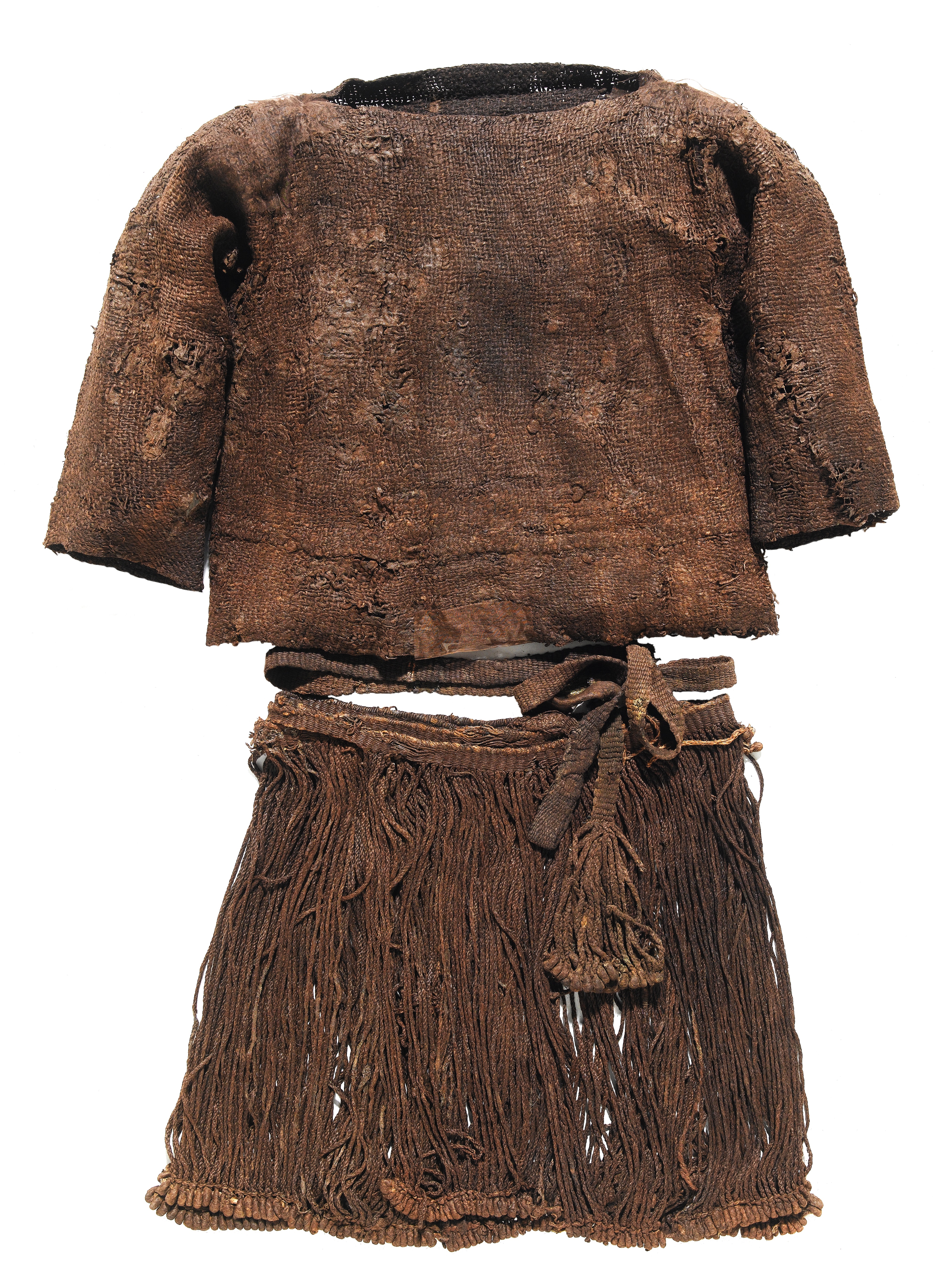
A girl's body had been placed within the tree trunk, laid out in a woollen tunic and cord skirt. Around her waist was a woven sash fastened with a large, bronze disc, while on her feet were leather shoes. Around each wrist she was wearing bronze bangles, and a small earring could be seen where her ear would have been.
Curiously enough, the acidic nature of the waterlogged ground meant that only fragments of her body survived, including teeth, hair, fingernails, and patches of skin and brain matter. Extraordinarily, however, a ghostly impression of her body remained pressed into the cowskin hide she was placed upon.
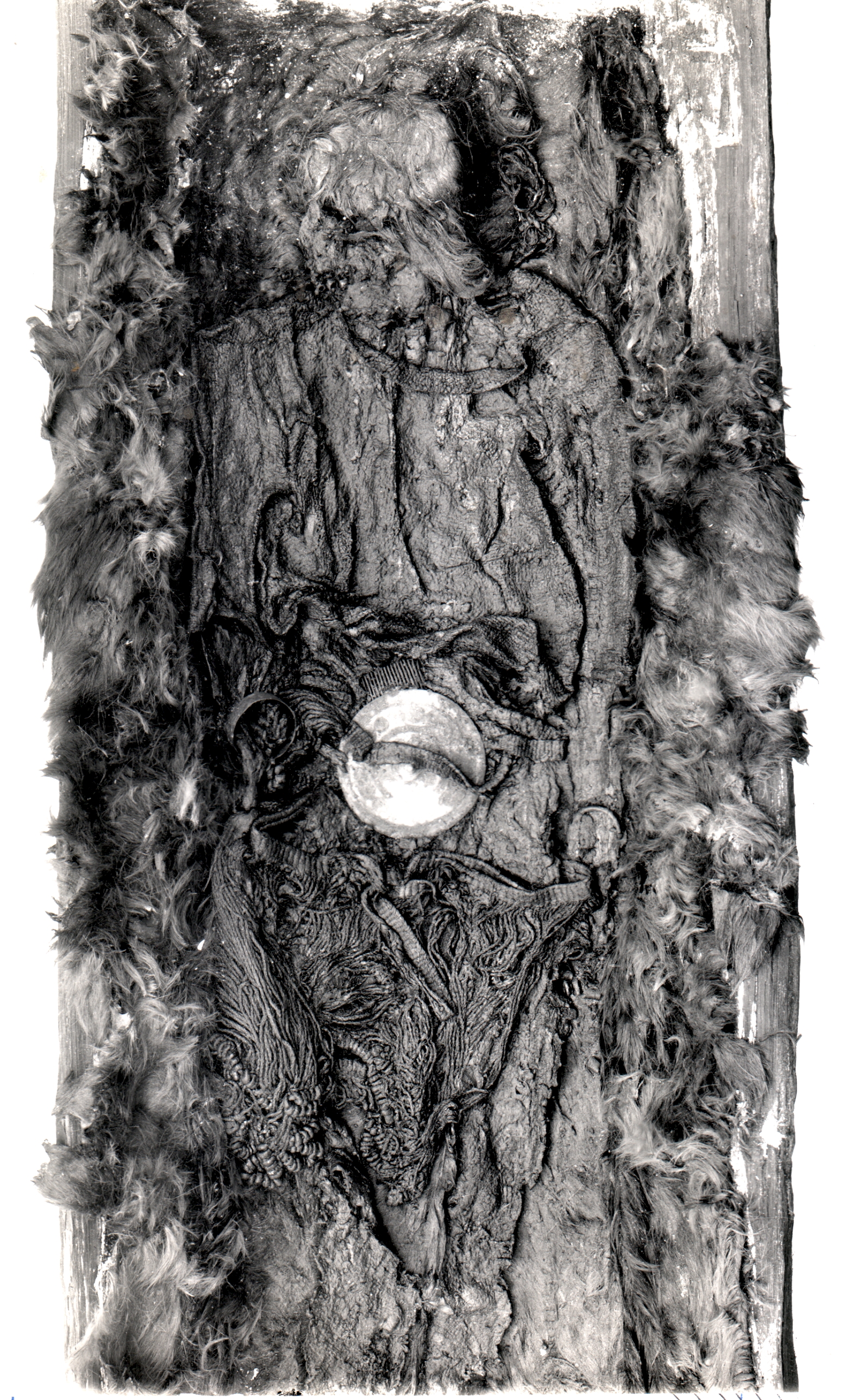
From all of this, researchers have been able to figure out that the girl was perhaps aged 16 to 18 when she died, and likely stood about 160 centimeters (63 inches) tall.
But the Egtved Girl was not alone in this burial. While she might get most of the attention, the girl was also buried with a leather bag at her feet. In this bag were the cremated remains of a child thought to have been up to 9 years old.
Who, exactly, these two children were, and why they were afforded such care and devotion in death, is still not really known. But archaeologists have been able to piece together a surprising amount of information.
A wealth of goods
Dating of the tree trunk has placed the burial as occurring 3,400 years ago during the Bronze Age. Her clothing and grave goods have given archaeologists an invaluable glimpse into the lives of people living in Denmark during this period of time.
A small container made from bark was placed near her head. Within this box were several grave goods, including a bronze awl, some dress pins, and even a hair net made from horsehair. It also contained some other organic material, thought to be moss, heather, wool, and leaves.
At her feet, there was another bark container. Inside this one, however, is thought to be the remains of an alcoholic drink. Analysis of the box shows what might have been a type of beer or mead, made with wheat, lingonberry, honey, and boy-myrtle.
In addition to these offerings, the body was also placed under a woollen blanket, and perhaps adorned with flowers. The presence of a delicate white yarrow flower found near her knee not only suggests that the burial happened in summer, when the plant bloomed, but also that these Bronze Age people may have known about the medicinal properties of the plant.
The origin of the Egtved Girl
What little remains of the girl has still been enough for scientists to uncover a surprising amount about her short life. This has largely focused on where she might have come from.
In recent years, the ability to use the levels of strontium preserved in the remains of ancient humans has given researchers an extraordinary insight into the lives of these people. This works on the basis that strontium ratios in the soil vary geographically.
As the strontium leaches into the groundwater, it is taken up by the growing plants and makes its way into the animals. When people then eat the plants and animals, they too take on the same ratio of strontium.
Researchers have been able to build up geological maps showing the different levels of strontium found across Europe. By testing the ratios found in the remains of these people, they can then compare the results and, theoretically at least, get a better idea of where someone might have grown up.
When scientists did this for the Egtved Girl, they found that her strontium ratios didn’t match those of Denmark. Instead, they think that she might have grown up in southern Germany, somewhere in the region of the Black Forest.
In addition to where she may have grown up, the researchers also suggest that in the year before her death, she may have been making shorter trips outside of modern-day Denmark, perhaps to northern Germany.
Others have questioned this interpretation, arguing instead that the samples that gave the Black Forest results were contaminated by the later use of fertilizers in the field. More recent work has even suggested she may have come from Scandinavia instead.
Regardless, these studies raise the intriguing possibility of long-distance travel and inter-community relationships.