Nature
 PUBLISHED
 1
1



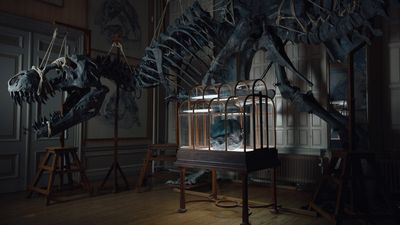


If you’ve ever dreamed of owning a Birkin, or gazed longing at the softest leather handbags in Saks, then allow us to present an alternative. A T. rex leather handbag is on display at a museum in Amsterdam before going on sale at an auction. However, the price might put you off slightly, you’ll need to reach deep into your traditional cow’s leather wallet for this, as the starting bid is set at $663,000 or £500,000.
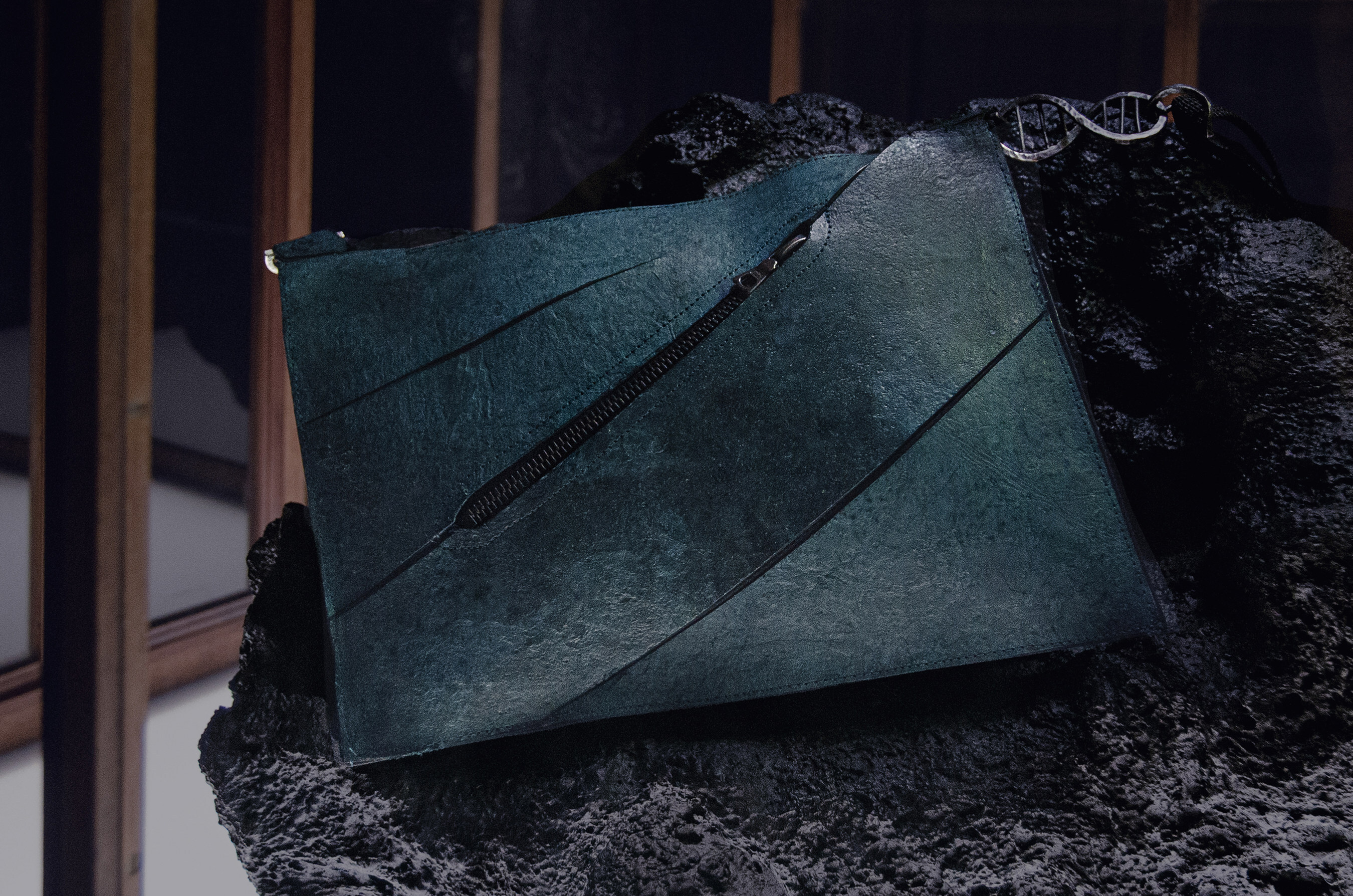
The handbag itself is made from "T. rex leather" made using reconstructed dinosaur collagen produced in a lab. The companies behind it, VML, The Organoid Company, and Lab-Grown Leather Ltd., suggest using T. rex leather is an ethical alternative to some of the current luxury leather options on the market.
The handbag was designed by techwear label Enfin Levé and has been on display at the Art Zoo Museum in Amsterdam since April 2. It sits alongside a cast of a T. rex skeleton, and after the display – which is due to last six weeks – the bag will be auctioned off and sold to the highest bidder.
“Enfin Levé has always designed through material behaviour and construction logic. With T-Rex leather, the goal wasn’t to impose a conventional luxury object, but to understand how it behaves - where it resists, how it holds tension, and how that could shape the design,” said Michal Hadas, Founder and Lead Designer at Enfin Levé in a statement.
“It has a distinct character and responds unlike any leather we’ve worked with. The final bag follows that logic, letting the material define the object rather than forcing it into familiar codes of luxury.”
To create the material, the team used fossilized T. rex collagen, which, remarkably, is able to survive for tens of millions of years. They then reconstructed the genetic information needed to recreate the protein and used that as the basis for the leather. The resulting material is structurally identical to normal leather, without the need to skin an animal, said the companies.
The project isn't without controversy, since there is no actual T. Rex DNA involved, and the product is only an imitation of what dinosaur leather might have looked like since, to make the handbag, they’ve only used T. rex collagen, not whole skin cells. And even the collagen basis is looking iffy.
"There really isn't much of a template to work from that could accurately reconstruct a collagen molecule that is specific to T. rex," Thomas Carr at Carthage College told Live Science. "Second, collagens are pretty generic molecules across all animals and so I'd be very surprised if there was a species-specific sequence that differentiated T. rex — or any dinosaur — from their closest living relatives."
The three companies argue that their handbag is "durable, repairable, biodegradable and fully traceable leather" without the need for harsh chemicals used in the tanning process. Of course, there are many other ways of achieving the same thing without having to invoke the name of the king of the lizards. May we suggest a wallet grown from bacteria instead?