Humans
 PUBLISHED
 2
2




Around 74,000 years ago, Homo sapiens perhaps had our closest brush with extinction (yet). By some estimates, just a few thousand humans survived the hardship, leaving a dwindling population to endure a harsh blip in our early history.
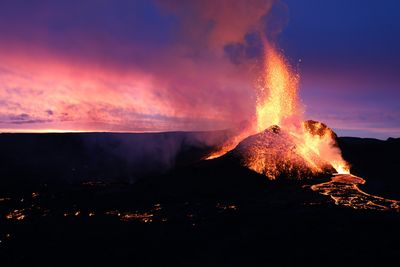
According to one influential theory – which has since come under scrutiny – a violent supereruption occurred at a giant volcano in the tropics, the remains of which are located today at Lake Toba in Sumatra, Indonesia.
Earth’s geological record bears evidence that a major eruption at Toba occurred around 74,000 years ago, releasing an estimated 2,000 cubic kilometers of material onto the surface over a period of nine to 14 days. Described as an eruption of “exceptional magnitude” and “exceptional intensity,” it flung huge amounts of dust and debris into Earth’s atmosphere, cloaking the sky in a thick blanket of soot that blocked out the Sun.
This potentially shunted Earth into a brief, mini-Ice Age. Estimates vary, but the global average temperature of the planet could have temporarily dropped by somewhere between 2.3°C (4.1°F) and 4.1°C (7.4°F). If this picture is accurate, it could have shifted the world into a frigid, food-scarce state, making survival a relentless struggle.
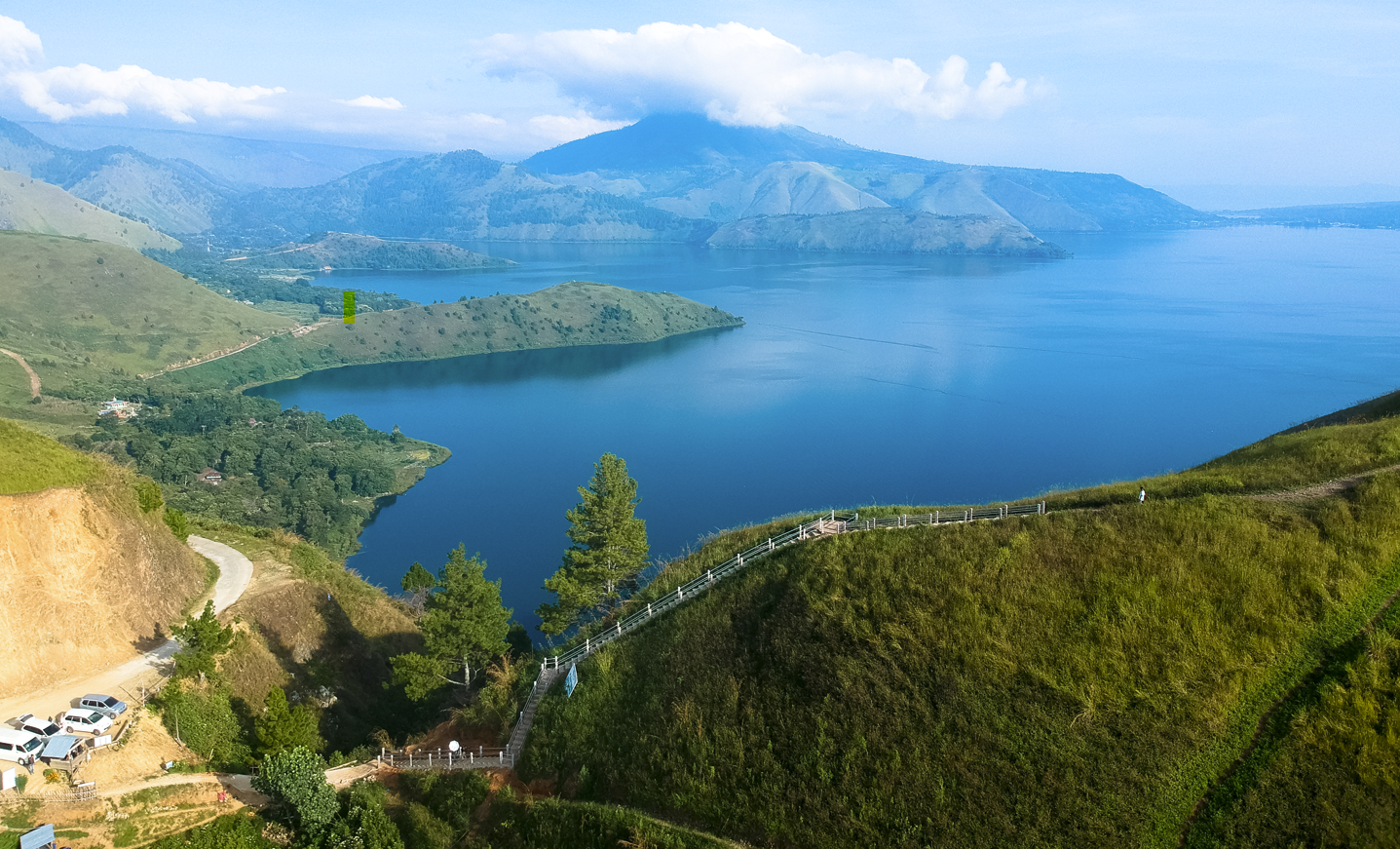
They were tough times, to be sure, but these harsh conditions might have driven us to innovate. At sites in the Horn of Africa, archaeologists have found evidence of cooking, advanced stone tools, and the earliest known use of archery, all dating to around the time of the eruption. According to a 2024 study, tiny volcanic glass shards embedded in the sediments chemically match those from Toba, precisely linking human occupation at the site to the supereruption.
The upheaval may also have reshaped human movement and migration. Instead of relying solely on lush “green corridors” during humid periods, populations appear to have started following seasonal rivers, so-called “blue highways”, that provided reliable water and food even during arid intervals.
Taken together, these hard times may have played an important role in eventually propelling our species out of Africa and across the globe.
"As people depleted food in and around a given dry season waterhole, they were likely forced to move to new waterholes," John Kappelman, professor at the University of Texas at Austin and author of the study, said at the time. "Seasonal rivers thus functioned as 'pumps' that siphoned populations out along the channels from one waterhole to another, potentially driving the most recent out-of-Africa dispersal."
These destructive qualities might also be imprinted in our genetics, not just geology and archeology. In 1972, research showed that our species has a surprisingly low diversity of haemoglobin protein. This, they suggested, was because our species had, at some point, reached a population bottleneck when the human population shrank to such a small size that genetic diversity was lost. Later studies estimated that this bottleneck may have occurred when the human population was culled to just 3,000 to 10,000 individuals.
Earlier proposals said the timing of this genetic constriction lines up with the Toba eruption, lending weight to the idea that the supereruption and its resulting “volcanic winter” created an extreme environmental pressure that nearly drove humanity to extinction.
Did Mount Toba Really Cause Humanity's Great Genetic Bottleneck?
It’s a fascinating story, but not everyone is on board. In more recent years, many scientists have pushed back against the so-called “Toba catastrophe theory” and argued that the multiple fragments of evidence have been incorrectly pieced together.
While few doubt that the Toba supereruption was a bad one, many climatologists and earth scientists do not support the original idea that the eruption sparked a “volcanic winter". As such, there's doubt that it was responsible for the genetic bottleneck.
Likewise, archaeological sites in Africa and Asia also show that many hominin populations persisted before and after the eruption, indicating they were relatively unfazed by the apparent cataclysm.
Studies of non-human animals complicate the picture further. A 2020 analysis of DNA from 28 mammal species across every continent found that only three experienced rapid expansion that coincided with the timing of Toba.
The question is: if the Toba supereruption wasn’t responsible, then what caused the genetic bottleneck in Homo sapiens? Well, we can say that this event was not totally unprecedented. In 2023, scientists put forward the idea that a severe bottleneck occurred between 930,000 and 813,000 years ago, reducing the population to just 1,280 breeding individuals. However, that has proven controversial, too.
Human history, it seems, is riddled with hard times and close calls.