Humans
 PUBLISHED
 1
1




Proteins recovered from ancient human relatives that roamed China more than 400,000 years ago could explain how mysterious “super-archaic” DNA found its way into modern humans.
When our species split from the rest of the family tree around 300,000 years ago, it wasn’t a clean break. We know this because we’ve recovered DNA from our closest relatives, the Neanderthals and Denisovans, and found that some of it shows up in modern humans.
This tells us that early Homo sapiens interbred with both groups, who had left Africa hundreds of thousands of years before us and were already set up in Asia and Europe by the time our species arrived.
But Denisovans themselves appear to contain DNA from an even older group of hominins – a so-called super-archaic population, whose identity is less certain. This is partly because it gets more and more difficult to extract DNA the further back you go in time.
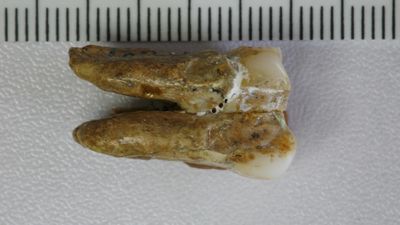
It’s against this backdrop that researchers in China extracted proteins from the enamel of six ancient hominin teeth found at three sites across northern and southern China, dating to a period in Earth’s history called the Middle Pleistocene.
The teeth belong to Homo erectus, an even earlier human relative that left Africa around 1.8 million years ago and spread around the world before us and our closer relatives had even got our boots on.
While it isn’t clear when H. erectus arrived in East Asia, it is thought that a population persisted there until roughly 300,000-400,000 years ago. This population didn’t give rise to modern humans, but the proteins recovered in the new research suggests their DNA may have reached us by a less direct route.
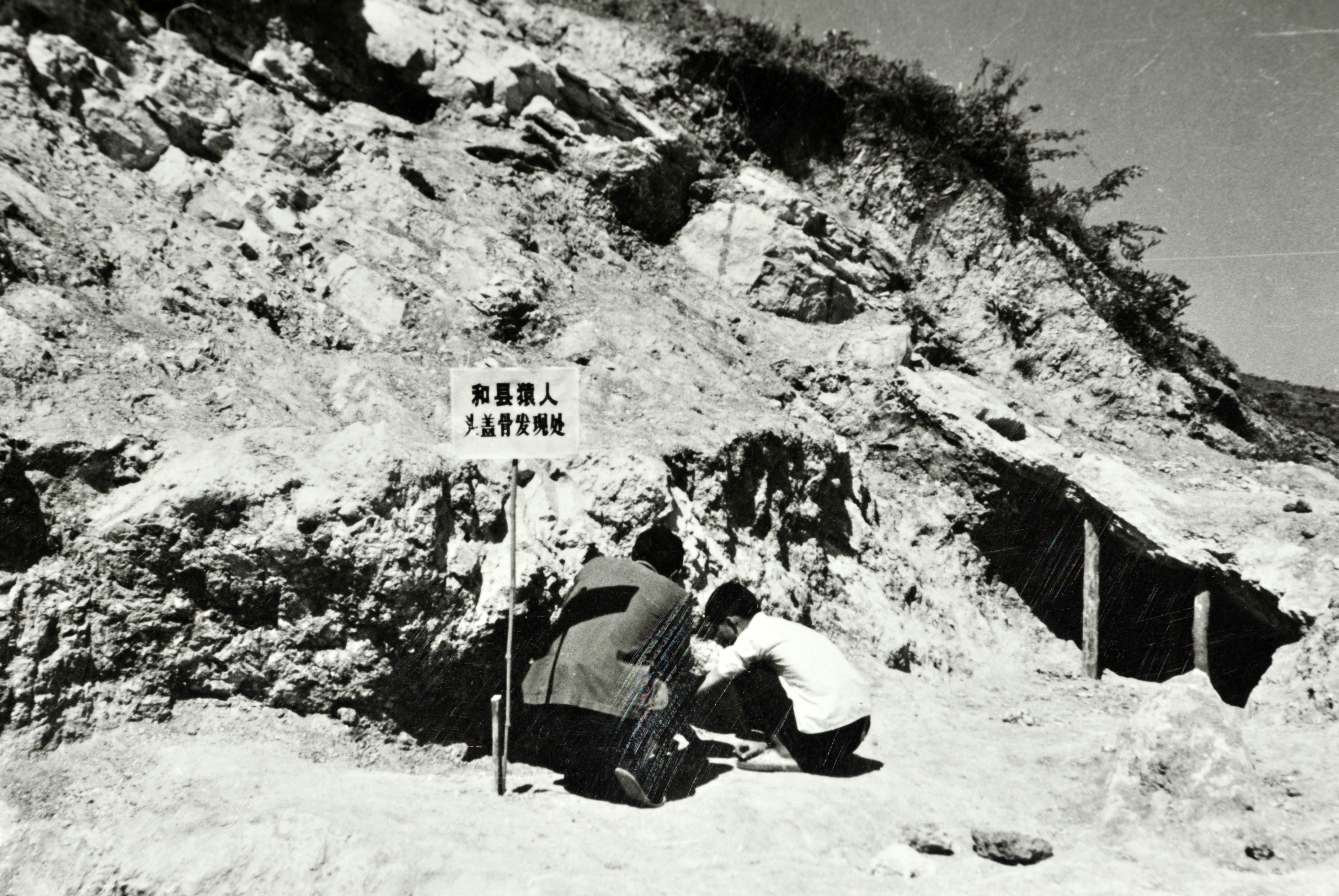
Though some peptides have previously been extracted from a 1.77-million-year-old hominin tooth in Dmnanisi, Georgia, that was thought to belong to H. erectus, this is the first report of H. erectus peptides that contain identifying differences in their sequences, allowing them to be distinguished from other hominin lineages.
The researchers identified two amino acid variants present in all six samples. One of these – AMBN(A253G) – hasn’t been seen before, and the fact it shows up in all the samples indicates that these individuals are all part of the same population.
The other variant – AMBN(M273V) – has been observed before in Denisovans and modern humans, suggesting a chain of interbreeding that passed DNA from this population into modern humans via Denisovans.
“It is a fascinating development to have molecular data for Homo erectus, and not just for one individual, but between five and six (depending if the Hexian teeth found in the same stratigraphic layer belong to a single individual or two),” Clément Zanolli, a palaeoanthropologist at the University of Bordeaux, who wasn’t involved in the study, told IFLScience.
Prior genetic studies have shown that Denisovans received somewhere between 0.5 to 8 percent of their genes from super-archaic hominins. About 15 percent of these regions appear to have been passed on to modern populations in Asia and Oceania through interbreeding with Denisovans.
It is suspected that populations of Denisovans and Homo erectus overlapped in both time and space in China, and so the finger had been pointing at H. erectus as the source of this archaic DNA. Now molecular evidence aligns with that hypothesis.
We really need to get DNA and more H. erectus to understand exactly how H. erectus is related to other humans and what the diversity inside H. erectus is.
Qiaomei Fu
The researchers propose a model in which Homo erectus interbred with Denisovans around 400,000 years ago, with some genetic variants from this population eventually making their way into modern humans that bred with Denisovans.
Zanolli’s only critique of the work is that it doesn’t include any analysis of the shapes of the teeth to complement the molecular study.
“Protein data are still scarce for Pleistocene hominins,” he said, “and it would have been great to have some diagnostic morphological features associated to the molecular signal to better understand if genotype and phenotype match.”
Qiaomei Fu at the Institute of Vertebrate Paleontology and Paleoanthropology, Chinese Academy of Sciences, who is the first author of the paper, told IFLScience that the work opens up many new questions and avenues for future research.
“We really need to get DNA and more H. erectus to understand exactly how H. erectus is related to other humans and what the diversity inside H. erectus is,” she said. “Now it is like a stone thrown in the pool that makes a big splash.”
The study is published in Nature.