Health and Medicine
 PUBLISHED


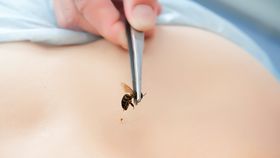


Live bee acupuncture might be mistaken for a Medieval torture method, but in the strange world of Internet-driven alternative medicine, it’s a health fad many people are using in the hopes of relieving various medical conditions.
Sound like your idea of a good time? Well, a new medical case study has shown this bizarre treatment can be deadly, even if you didn't think you were allergic to bee stings.
As reported in the Journal of Investigational Allergology and Clinical Immunology, a woman in Spain has recently become the “first reported case of death” related to living bee acupuncture.
Strangest of all, the 55-year-old woman had been receiving this treatment every month for two years to improve muscular contractures and stress. She showed no signs of intolerance to the venom and no other health problems. However, half-way through one of her treatments, she experienced a severe allergic reaction and suddenly lost consciousness. She died some weeks later in hospital of multiple organ failure.
Live bee venom acupuncture (BVA) involves grabbing a buzzing bee, placing it near the skin, and then giving it a good squeeze to provoke it into stinging. It’s used as a traditional medicine in Korea and remains especially popular in wider parts of Asia, Eastern Europe, and South America. The theory goes that the body’s response to the venom can help improve circulation and manage inflammation. Its advocates claim it can be used to treat a whole bunch of health problems, from pain relief and arthritis to migraines and stress. One of the most outlandish (and downright dangerous) claims is that bee venom can be used in cancer therapy.
Needless to say, most scientists think this practice is a load of mumbo-jumbo and it should not be considered a proper medical treatment. A meta-analysis, published in 2001 in the journal BMJ Open, looked at over 300 relevant studies on the practise and concluded “there is low-quality evidence, based on one trial, that BVA can significantly reduce pain, morning stiffness, tender joint counts, swollen joint counts and improve the quality of life of patients.”
As this recent news shows, it also has the potential to be fatal. When a bee stings you, it releases meletin, the allergen in bee venom that causes red blood cells to pop and leads to the main ouch factor. The sting also releases a dose of histamine, causing your tiny capillaries to leak fluid. Your body perceives the unknown proteins in the venom as invaders and will release an immune response. Many people, however, can have a hypersensitive response to the venom, where the whole body goes into overdrive trying to rid itself of the foreign body.
The long and short of it: stay the hell away from bee stings whenever possible.