Culture and Society
 PUBLISHED


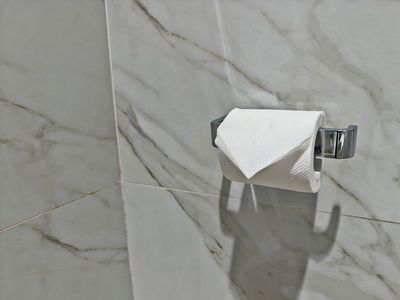


Next time you check into a hotel and you're eyeing up how much complimentary shampoo you can take home, be sure to look out for a curious trend in the bathroom. Is the end of the toilet paper roll folded into a neat, downward-pointing triangle? You'd better hope so.
No one knows when or where this habit started, but it’s a phenomenon that some people have spent an incredible amount of time looking into over the past decades.
One of those people is writer David Feldman, somewhat of a world-leading expert on "toilet paper origami" or "toilegami". Through some investigative snooping for his news column Imponderables, Feldman reportedly found that the folding is meant to be a subtle signal that care has been taken to clean the bathroom.
It gives customers the impression that the grubby hands of a stranger have not been near the thing you're about to touch, even though there's a good chance that roll has been used by someone else before.
Feldman quoted James P. McCauley, executive director of the International Association of Holiday Inns, who said this about the matter: "Hotels want to give their guests the confidence that the bathroom has been cleaned since the last guest has used the room."
According to some, the toilegami trend opens up into broader ideas about psychology, culture, and humanity. Yes, seriously.
Speaking many years ago, Dr Susan Blackmore used the example of hotel toilet paper folding to illustrate the idea of “memes.” This is not the irreverent images that pop up on your social media feed, but a theory coined by Professor Richard Dawkins that explains how ideas and behaviours spread from person to person through a form of cultural transmission.
Just like genes in natural selection, it's tempting to assume that something must be useful or valuable to be passed on. However, just like genes in natural selection, ideas can sometimes proliferate even if they aren't important at all. The toilet roll fold, Dr. Blackmore suggested, is a perfect example of this. It's a behaviour with no real value that has nonetheless spread to every corner of the globe, replicated faithfully by housekeeping staff from Manhattan to the backwaters of India.
We tend to copy what we see, we pass on what we've copied, and before long, a habit in one hotel room becomes an unspoken rule for millions of people.
Who would have thought a hotel toilet would be so interesting?
[H/T Mental Floss]